I haven’t shared another blogger’s post on here in some time, but I think the post I have here today is worth sharing.
I think it’s important to elevate the voices of people in populations most vulnerable to the virus. Therefore, I thought it was important to share a post that Jackie at Disability & Determination wrote a few days ago about the consequences of overwhelmed hospitals for people with disabilities. I’m not going to spoil her blog post, but they are immense, and in many cases, deadly. I am sharing a link to her blog post as well as her blog below.
When I first heard anyone refer to themselves as a spoonie, I was, needless to say, confused. I thought of spoons as tools to use for eating a lot of our food, not for something we called ourselves.
I would learn later on that the people who called themselves spoonies were people whose experiences with chronic illness (whether physical or mental) could be described with this thing called spoon theory.
But what is spoon theory?
Spoon theory, a term first coined by Christine Miserandino when describing her experience with lupus, is a shorthand for describing how, because of someone’s illness or disability, they have a very limited amount of physical and/or mental energy to do tasks throughout the day (in other words, a very limited number “spoons”) before they are just unable to do any more tasks.[1] For example, let’s say that you have only twelve spoons for the day based on how you feel and how much energy you have, and driving to and from work is three spoons, cooking for the family is four spoons, and work itself is three spoons. That leaves you with only two spoons, and that’s before we’ve even gotten to hygiene, housecleaning, taking care of any pets, laundry, or any other of the basic day-to-day tasks that many of us may take for granted (before we even get to socializing with friends or anything like that).
This shorthand spoon theory is supposed to help people who don’t have that shared spoonie experience (like me) understand that people with many illnesses have limited energy to do the tasks they need to do, let alone the tasks they’d like to do. Through having that understanding of spoon theory and the experiences of spoonies, some of us, particularly those of us who (like me) don’t have that shared experience of living with a chronic illness or other disability, can become more understanding of our friends and family members who do have a variety of illnesses or disabilities. Learning about spoon theory has certainly helped me become more understanding of friends whose day-to-day experiences with various illnesses or disabilities could be described with spoon theory.
All that being said, I would be interested in hearing from any friends or other readers who have experiences with various chronic illnesses and disabilities. Do you, as well, find it helpful for able-bodied people to have an understanding of spoon theory, particularly as it relates to your illness? If you don’t find it helpful in your case, why not? I know that not all illnesses are the same, so I’m interested in hearing from people who have a variety of illnesses, whether it relates to physical health, mental health, or both.
With the election process in 2020 ongoing, I wanted to share a post that fellow blogger Karly shared on the cost of being disabled. While people with muscular dystrophy (what Karly was diagnosed with at a young age) might experience different costs from someone with a different type of disability, one thing that is universal is that American health care often makes it miserably expensive to have a disability. Since Karly’s hope is “to highlight the importance of voting with disabled people and health care in mind,” I figured that sharing her post at a critical point in the election process is ideal.
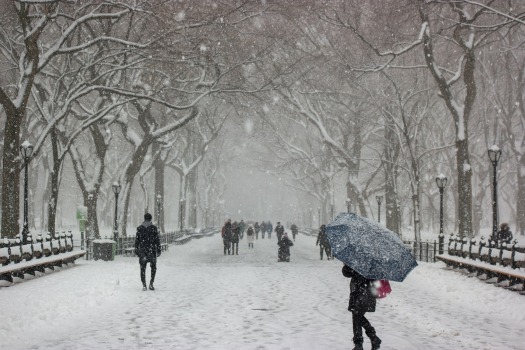
For able-bodied people like me, commuting in the snow takes a little bit more twisting and turning than it does on the average day. It’s annoying, but doable, for me.
For people with certain health challenges, whether it be physical health or mental health, the barriers created by individuals’ and/or society’s handling of winter weather, as well as barriers caused by the bad weather itself, can be problematic. Here are a few such barriers:
We as individuals don’t clear away a path wide enough for wheelchair users to navigate our sidewalks.
Many wheelchair users need a pathway that’s at least 32 inches, so a pathway shorter than that will most definitely not be friendly to people using wheelchairs. For this, the solution is simple—just clear a wide pathway on our sidewalks!
We as a society have no effective way of handling the crosswalks that get plowed in.
After major snowstorms, many a crosswalk in New York City, my hometown, get plowed under inches or even feet of snow. This affects wheelchair users, the young, people with other mobility issues (regardless of whether they use a walker or wheelchair or not) and the elderly the most, keeping all of these groups from effectively moving around. I am personally not aware of effective yet reasonable alternatives to this problem, though if anyone has solutions you can let me know in the comments section down below!
Pathways between sidewalks and buses are nonexistent or not wide enough for wheelchair users to pass, or for people with other mobility issues to navigate.
This is something I only noticed during a blizzard in January 2018, but boy is it a problem! Many pathways between sidewalks and buses that should exist don’t exist, making access to the bus impossible unless you’re completely able-bodied as I am. If the entity/entities responsible can shovel a pathway between sidewalks and buses wide enough for wheelchair users and people with other mobility issues to pass, the problem can be fixed.
The bad weather has adverse affects on mental health.
A string of bad weather days can affect people who deal with claustrophobia (fear of involving being confined to small spaces), and the weather can cause great deals of stress that can be harmful to mental health, to name two. Nobody per se is at fault for these issues, but nevertheless we should be aware that these issues exist.
So next time a snow or ice storm comes, some of us may rejoice while others may complain. But regardless of what our own reactions are, we must be sensitive to the challenges that people with disabilities face in the elements. To that end, feel free to comment below is there’s some issue (physically or mentally) caused by winter weather that I did not mention in this post.
When I originally published this post back in July of 2018, there was debate about efforts by some companies (Starbucks, McDonald’s) and cities (San Francisco, Seattle) to ban the usage of plastic straws within their entities. Then, more recently, I heard that the United Kingdom will ban straws, among other plastics, starting in April 2020. Many environmentalists think it’s important to make sure that we reduce plastic waste and therefore reduce our usage of plastic straws, while many disability activists argue that there are currently no feasible alternatives to a single-use plastic straw.[1]
Personally, I think a ban must wait until there are feasible alternatives for people of all levels of ability. But I think this discussion on straws needs to be about more than straws.
Namely, we need to discuss our society’s lack of willingness to listen to the physically disabled, and the proposed straw ban is just the latest example of this.
Consider this—in spite of the fact that many disability activists (including many who have the lived experience of being disabled) have been raising concerns about such bans, the entities that planned to ban plastic straws are still going ahead. If we, as a society, listened to the disabled, wouldn’t we at least hear their arguments? Wouldn’t we at least consider for a second why they are saying what they’re saying? These, of course, are rhetorical questions, because in spite of many activists saying that other alternatives to plastic straws do not work, entities are still going ahead with their plans to ban usage of the single-use plastic straw.
Sadly, this pattern of not listening to the disabled goes well beyond straws. Here are a few of the many examples of parts of our society not listening to the disabled:
Airline seats continue to shrink. In spite of many activists saying that airline seats have shrunk to the point that the disabled cannot get out safely in the event of an emergency, there are still successful attempts to shrink airline seats even further yet.
We continue to view people with disabilities as inspirations. There have been oh so many times when people with disabilities have told others—in writing, in-person, through YouTube and through many other means—to stop viewing them as inspirations for just doing tasks in daily life that the rest of us perform.[2] If our society listened to them, then we would stop viewing these individuals as inspirations. But alas, many of us don’t listen.
There are attempts to dilute the Americans with Disabilities Act (ADA). Disability activists have, on many occasions, warned against any legislation that undermines the ADA, yet amazingly such legislation to weaken the ADA passed the House of Representatives earlier this year. If we listened to people with disabilities, such a bill would be in the garbage can, not passed in the House.
Not listening to people with disabilities is very much a pattern of our society. This pattern did not start with the straw issue, and I fear that it will not end with the straw issue. However, it is about time that we change and actually start listening to people with disabilities.
Please note that I will not publish a post on Tuesday, May 28, 2019.
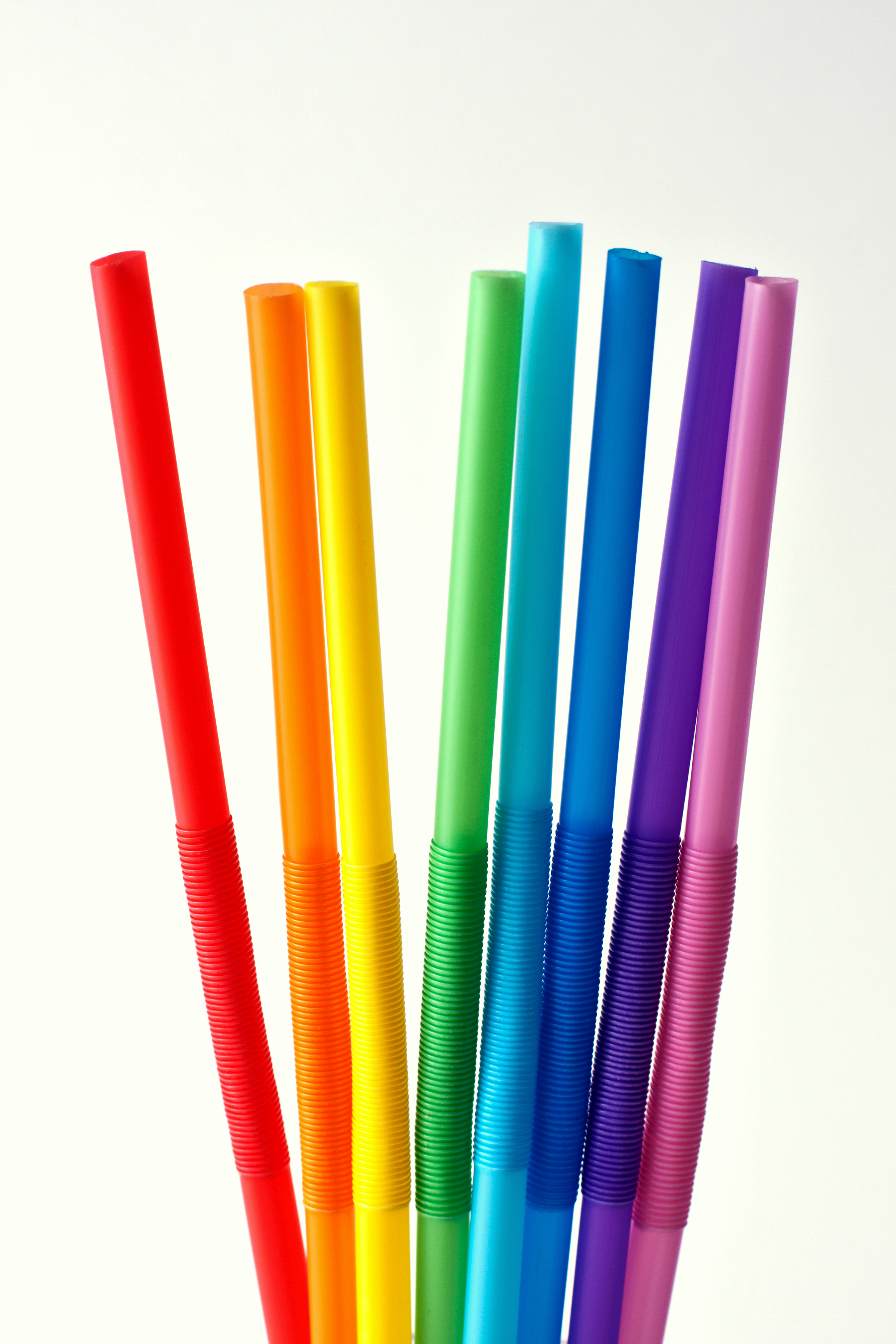
I can’t think of anything more appropriate for a post involving straws than a picture of straws. By Horia Varlan from Bucharest, Romania (Eight drinking straws in rainbow colors) [CC BY 2.0 (https://creativecommons.org/licenses/by/2.0)%5D, via Wikimedia Commons

 Blind Injustice