I did not publish a post yesterday evening for a reason: because I wanted to start off early Tuesday, Election Day, with a reminder for people to vote if they have not voted already.
Many of you who’ve read this will have already voted; if you are one of them, great! But if you are eligible to vote and you haven’t voted, then today is your day to vote. If you are voting today, please wear your mask and socially distance when going to the polls.
Speaking of mask wearing, I’ve noticed quite a bit of vitriol from anti-mask people. I don’t know if this is a post that will reach any such individuals, but let me be frank—before we knew about the science of mask wearing in New York (and elsewhere), the COVID situation here was a living nightmare. Hospital sirens were constant. My family went through a 10-week period where we lost, on average, three people we knew a week. A hospital in my county lost thirteen individuals…in 24 hours. This was the world without mask wearing. I beg people to wear their masks.
Under normal circumstances, I would be telling all of you, my readers, to vote when Election Day comes in the United States (sorry to readers who don’t live in the States).
But these are not normal circumstances. We are in the midst of a global pandemic, so given the crowds that accumulate at many polling places on Election Day, some may hesitate to go to the polls. That is understandable.
However, that is not an excuse to avoid voting. Many places have early voting—a period of voting before Election Day where you can go to a polling place at a time that works for you, during a time when crowds are hopefully light. Many places allow you to cast a mail-in or absentee ballot, which would allow you to get a ballot delivered to you and then you can send the ballot back via the mail. There are even a few states that only have vote-by-mail, but contrary to what President Trump may like you to believe, there is actually very little fraud that goes on with this method of voting—just ask Washington’s Republican Secretary of State.[1]
If you’re not sure of what your options are for sending your ballot, contact your local Board of Elections office. It is the job of your local Board of Elections to give you the proper information on when and how to vote. Don’t be shy about using your Board of Elections in that manner. And, if you’re not sure how to reach out to your local Board of Elections, please let me know—I can try to find that information on your behalf.
But regardless of how you vote, make sure that you vote and vote safely. If you go to a polling place, either for early voting or on Election Day, please wear a mask and practice social distancing. If you are voting by mail, don’t waste your time with your mail-in ballot, as Election Day is two weeks from tomorrow. But please vote.
P.S. As I was getting ready to schedule this post for publication, I realized that this is my 200th post. So yay for this milestone post being about voting!
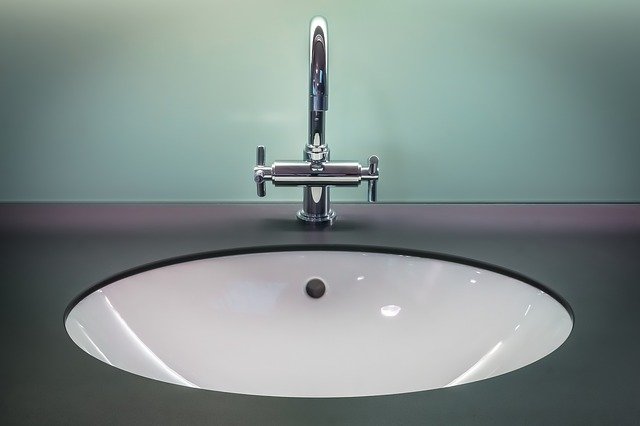
A sink, where people need to go to wash their hands after using the bathroom.
TMI time. Or, for those who aren’t into texting: time to give a little too much information (but there’s a point to it…I promise).
A couple of weekends ago, I was heading home from a small gathering of people rooting for my favorite soccer/football team, Norwich City. It was a good time, but there was one problem: I needed a bathroom. However, I couldn’t find one (at least not without getting full table service at a restaurant, which I really didn’t want to do) because many of the places I relied on in the past for public bathrooms wherever I was were closed due to what they call “COVID precautions.” And even places that you think would have an open restroom for customers, such as a Dunkin Donuts with a sign on its door saying that the restroom is available for customers (which I was, because goodness me, I wanted to use a bathroom even if it required getting one or two donuts), were closed due to “COVID precautions.”
However, I had a home where I could eventually use a bathroom and relieve my discomfort. It was an unpleasant and at times uncomfortable ride home, but I had a home to go to where I could use a bathroom.
But some people, unlike me, do not have homes to go to and therefore struggle to find bathrooms because of all the typically public restrooms or customer-only restrooms closed due to “COVID precautions.” And because of that, because of said “precautions,” we are, in many cases, creating potential sanitary issues, not to mention issues of basic human dignity.
Speaking from experience, at the height of the pandemic in New York City, all bathrooms owned by the city’s Parks Department and all bathrooms in libraries were closed.[1] This is a real problem because, as I’ve found myself learning more about homelessness during the pandemic, it is these library and Parks Department bathrooms (along with other public restrooms) that many individuals experiencing homelessness would rely upon to use a bathroom and wash their hands. Without those bathrooms, what does someone do to use the bathroom and wash their hands?
The fact that we’re asking these questions, in New York and in many other places,[2] is troubling under any circumstances, but even more so in the middle of a deadly global pandemic. It’s troubling under any circumstances because the ability to use a bathroom and wash one’s hands has become more of a luxury of having a home and money during the pandemic, when in reality it’s a human necessity and something that is really needed to uphold the dignity of a human being. It’s especially troubling because without the ability to wash one’s hands, gone is also the ability to wash away one’s germs—the last thing we need during a global pandemic. In a way, by taking away access to public restrooms, we might end up increasing the risk of COVID among our most vulnerable.
So why have many bathrooms closed, even though for the homeless the availability of bathrooms is an important COVID precaution?
The sense I get (though I could be wrong) is that it is related to some sort of fear of those cleaning the restrooms catching COVID. I can understand why some people may have that fear. However, I think the fact that COVID cases have stayed low in my home city (New York), even as more restrooms are opening up in restaurants and other places (albeit not as many as there should, especially for the homeless), is a sign that you can have open restrooms, clean them, and keep the spread of the virus slow, all at the same time.
What I propose, then, is that more places with public restrooms open their restrooms, but take the appropriate precautions in keeping the restrooms clean and the cleaning employees COVID-free. As New York’s low COVID case count during the summer shows (we’ll see what the fall brings), it is possible to have open bathrooms and a low level of COVID cases. So, let’s have bathrooms available for people experiencing homelessness. Let’s push for our elected officials to do this. After all, using a restroom and washing one’s hands at any time, but especially during a global pandemic, should not be a luxury, but a human right, a public health issue, and a matter of human decency.
[1] All libraries were closed for a time during the pandemic. And, as of the time I am writing this, most libraries are still closed in New York City.
[2] I hate to say “do a Google search.” But really, please do. The situation has gotten so bad in many places that the Los Angeles Times has a story on strategies for peeing while out (which I can’t read in full because of their paywall). Pew Charitable Trusts was talking about issues with bathroom access in Seattle. And so on…
There’ve been some studies suggesting that many Americans that were on unemployment benefits with the old amount (which included the $600 a week enhanced unemployment benefits)—maybe even close to 70% of Americans on unemployment benefits—were receiving more money from their benefits than from the jobs they used to hold.[1] That seems to be why the matter of unemployment benefits became such a contentious debate.
Those advocating for less generous unemployment benefits during COVID believed that the issue was with the benefits being way too large, to the point of potentially dissuading some from seeking work. I’d argue, though, that the issue is misdiagnosed—the issue is that so many employers are so outrageously cheap that the bar for “generosity” has been set so low.
Consider the fact that an American on unemployment benefits was receiving, on average, $921 a week.[2] That amounts to $47,892 if you extend that for an entire 52-week year—an amount still low enough that it would not cross the threshold to a living wage for a family of three in even the most affordable states in America.[3] In other words, individuals were (on average) receiving less than the equivalent of a living wage, and that was still more generous than what most Americans on unemployment benefits were receiving from their previous employers. Considering that fact, the issue is that most employers of these former employees did not think their employees were worth enough to pay them a living wage, so that employees can easily afford rent, groceries, utilities, and many other basic items. Full stop.
The systemic issues that have led to such low wages for so many Americans may take years, if not decades, to address (if they get addressed). In the interim though, we should stop saying that unemployment benefits were “too generous”—instead, many former employers were not generous enough.
I haven’t shared another blogger’s post on here in some time, but I think the post I have here today is worth sharing.
I think it’s important to elevate the voices of people in populations most vulnerable to the virus. Therefore, I thought it was important to share a post that Jackie at Disability & Determination wrote a few days ago about the consequences of overwhelmed hospitals for people with disabilities. I’m not going to spoil her blog post, but they are immense, and in many cases, deadly. I am sharing a link to her blog post as well as her blog below.