Addressing Cancel Culture

As of late, the whole idea of โ€œcancel cultureโ€ has received a lot of flack, particularly from some conservatives in the United States political discourse.

But why all the flack, and is it deserved?

As far as I can tell, cancel culture is a term used to describe how, in the eyes of some, too many things get โ€œcancelledโ€ (in other words, boycotted by some people). In a way, the term seems to come from a place of frustration.

And I can understand the frustration. If something I like is cancelled by a group of people, I might feel frustrated as well. I would feel especially frustrated if something I like is cancelled by a group of people, and the reason for cancelling it seems petty or pointless or something I disagree with.

At the same time, however, it must be acknowledged that there have been times when cancelling something brought about some form of change. Here are three notable examples:

  • In the mid-1950s, after Rosa Parks was arrested for refusing to give up her seat on a bus in Montgomery, Alabama, there was a bus boycott in Montgomery. A young minister by the name of Martin Luther King Jr. led the boycott. This boycott led to an ordinance being passed that allowed people to sit virtually anywhere on the bus in Montgomery. It also put Dr. King on the path to becoming a prominent and successful voice for African American civil rights.
  • The National Farmworkers Association, led by Cesar Chavez, led a strike against grape growers in Delano, California, in protest of the exploitation of migrant workers. Not only did the boycott eventually lead to a settlement, but it also put into the national limelight the issue of the treatment of migrant farm workers.
  • In protest of South Africaโ€™s system of apartheid, there was a movement toward divestment from South Africa until it ended said system. This movement started in the 1960s but gained momentum in the 1980s. Some credit this divestment movement as a crucial component of ending apartheid in South Africa.

There are other, smaller, examples, but I highlight these two because of how much of an impact these particular boycotts went on to have.

However, I also acknowledge that there are many boycotts that are not successful. For example, movements to divest from fossil fuels have yet to curb global warming, boycotts against Chick-Fil-A for certain anti-LGBTQ+ stances company leadership has taken in the past have not been successful in any way, and Jeff Bezos continues to get richer in spite of all the people (including yours truly) who try to boycott Amazon as much as possible. In fact, it is with great frequency that a boycott, a cancelling of something, gets publicity for maybe a day and then fades into the background.

When considering the fact that some boycotts work, but many donโ€™t, perhaps one should find a medium between mocking any boycott as โ€œcancel cultureโ€ and thinking that boycotts are always a recipe for success. Instead, I suggest that perhaps the detractors of cancel culture remind themselves of the times in history that cancelling something actually worked, and that its most ardent supporters get smarter about when and how they cancel something (so as to maybe make a lasting impact). Cancelling something does not guarantee change, but it can help create change, if done effectively.
Blogging Awards: To Accept or Not to Accept?

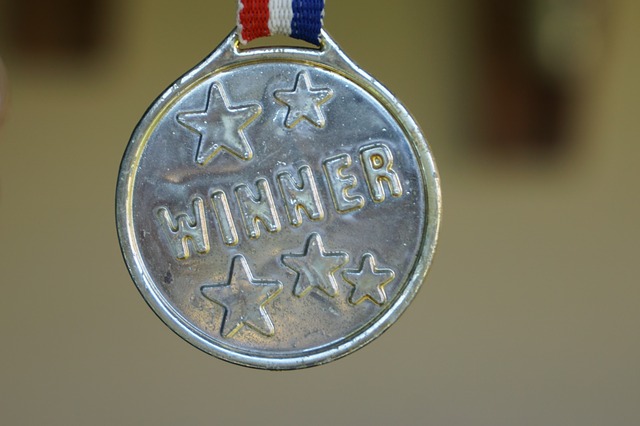
A winner’s medal. (Not that I receive any for winning a blog award, but this seems appropriate since we’re talking about winning things.)

As some of my readers mayโ€™ve seen, I accepted another blogging award in the past couple of weeks. Iโ€™ve tended to enjoy accepting these awards and โ€œpaying it forwardโ€ to other bloggers by nominating deserving bloggers for those awards.

However, I also realize that not all bloggers have the same attitudes I do about awards. Iโ€™ve heard of bloggers who have an indifferent attitude about awards, and bloggers who even dislike accepting them. Given the differing attitudes about awards, I think that a good follow-up to my recent blog award acceptance is to express my own thoughts about blog awards, and give room for open conversation about them in the comments section below.

Soโ€ฆblogging awards: To accept or not to accept?

Really, itโ€™s all up to you. You, the recipient of the award, can choose to accept or not accept the award, and I think there are valid reasons to accept and valid reasons not to accept. And, if you accept the award, you can choose what that acceptance of the award looks like.

Therefore, instead of giving a definitive โ€œyou must acceptโ€ or โ€œyou must not accept,โ€ I think it would be helpful to outline some benefits Iโ€™ve seen to accepting blog awards through award acceptance posts, as well as some pitfalls.

Among the benefits Iโ€™ve seen for accepting blog awards include the following:

  • These award acceptance posts give an opportunity to share things about myself that I would otherwise not share.
  • The award acceptance posts tend to give me an opportunity to highlight the work of deserving bloggers, through nominating said bloggers for the award.
  • I really enjoy sharing good news about myself and my blog.
  • Not that I have ever intended this to be a benefit, but it seems like my blog following grows by a decent amount after I accept an award nomination.

But, I have also noticed some pitfalls to the blog award posts. Here are a few pitfalls Iโ€™ve seen:

  • Blog award posts, and particularly award posts where you need to nominate other bloggers for the award, take a lot of work and time. Honestly, identifying other deserving bloggers is the most time-consuming part of a blog award post for me, and formulating my own questions for other bloggersโ€™ blog award acceptances is also a time-consuming process.
  • While I enjoy sharing more things about myself, some questions from some blog award posts may require people to answer questions about themselves they might not feel comfortable answering in a public realm.
  • I havenโ€™t gotten to this point as a blogger yet, but Iโ€™ve seen some bloggers get nominated for awards often enough that accepting every award post would mean more award posts a month than they might like.

The decision on whether to publish an award acceptance post or not should come down to one thing and one thing only: whether you feel that the award posts are a net benefit for you and your blog, or a net drawback. If it is a net benefit, then go ahead and publish those award posts. If itโ€™s a net drawback, then you may want to consider something other than a traditional award postโ€”what you should consider depends on what the biggest drawbacks and benefits are for you. Personally, if I get to the point that I get so many blog award posts that it would be too time-consuming and get me too much away from the focus of my blog (outweighing any benefits), then I might consider doing something similar to what Ashley at Mental Health @ Home doesโ€”in some form of wrap-up post (for me, possibly a wrap-up post for the year, as opposed to a wrap-up post for the week in Ashleyโ€™s case), thanking bloggers who nominated the blog for certain awards.[1]

Am I missing any benefits or drawbacks to accepting blog award posts? Do you accept blog award posts, and why have you reached your decision? Feel free to talk about these things and anything else relevant to blogging awards in the comments section below!


[1] If you want to read a different point-of-view on whether to accept or not to accept blog awards, I recommend reading Ashleyโ€™s post on this topic. Sheโ€™s coming at it from a different perspective than I do, but I think itโ€™s worth the read: https://mentalhealthathome.org/2019/12/08/do-you-do-blog-awards/

Homelessness, Bathrooms, and COVID

A sink, where people need to go to wash their hands after using the bathroom.

TMI time. Or, for those who arenโ€™t into texting: time to give a little too much information (but thereโ€™s a point to itโ€ฆI promise).

A couple of weekends ago, I was heading home from a small gathering of people rooting for my favorite soccer/football team, Norwich City. It was a good time, but there was one problem: I needed a bathroom. However, I couldnโ€™t find one (at least not without getting full table service at a restaurant, which I really didnโ€™t want to do) because many of the places I relied on in the past for public bathrooms wherever I was were closed due to what they call โ€œCOVID precautions.โ€ And even places that you think would have an open restroom for customers, such as a Dunkin Donuts with a sign on its door saying that the restroom is available for customers (which I was, because goodness me, I wanted to use a bathroom even if it required getting one or two donuts), were closed due to โ€œCOVID precautions.โ€

However, I had a home where I could eventually use a bathroom and relieve my discomfort. It was an unpleasant and at times uncomfortable ride home, but I had a home to go to where I could use a bathroom.

But some people, unlike me, do not have homes to go to and therefore struggle to find bathrooms because of all the typically public restrooms or customer-only restrooms closed due to โ€œCOVID precautions.โ€ And because of that, because of said โ€œprecautions,โ€ we are, in many cases, creating potential sanitary issues, not to mention issues of basic human dignity.

Speaking from experience, at the height of the pandemic in New York City, all bathrooms owned by the cityโ€™s Parks Department and all bathrooms in libraries were closed.[1] This is a real problem because, as Iโ€™ve found myself learning more about homelessness during the pandemic, it is these library and Parks Department bathrooms (along with other public restrooms) that many individuals experiencing homelessness would rely upon to use a bathroom and wash their hands. Without those bathrooms, what does someone do to use the bathroom and wash their hands?

The fact that weโ€™re asking these questions, in New York and in many other places,[2] is troubling under any circumstances, but even more so in the middle of a deadly global pandemic. Itโ€™s troubling under any circumstances because the ability to use a bathroom and wash oneโ€™s hands has become more of a luxury of having a home and money during the pandemic, when in reality itโ€™s a human necessity and something that is really needed to uphold the dignity of a human being. Itโ€™s especially troubling because without the ability to wash oneโ€™s hands, gone is also the ability to wash away oneโ€™s germsโ€”the last thing we need during a global pandemic. In a way, by taking away access to public restrooms, we might end up increasing the risk of COVID among our most vulnerable.

So why have many bathrooms closed, even though for the homeless the availability of bathrooms is an important COVID precaution?

The sense I get (though I could be wrong) is that it is related to some sort of fear of those cleaning the restrooms catching COVID. I can understand why some people may have that fear. However, I think the fact that COVID cases have stayed low in my home city (New York), even as more restrooms are opening up in restaurants and other places (albeit not as many as there should, especially for the homeless), is a sign that you can have open restrooms, clean them, and keep the spread of the virus slow, all at the same time.

What I propose, then, is that more places with public restrooms open their restrooms, but take the appropriate precautions in keeping the restrooms clean and the cleaning employees COVID-free. As New Yorkโ€™s low COVID case count during the summer shows (weโ€™ll see what the fall brings), it is possible to have open bathrooms and a low level of COVID cases. So, letโ€™s have bathrooms available for people experiencing homelessness. Letโ€™s push for our elected officials to do this. After all, using a restroom and washing oneโ€™s hands at any time, but especially during a global pandemic, should not be a luxury, but a human right, a public health issue, and a matter of human decency.


[1] All libraries were closed for a time during the pandemic. And, as of the time I am writing this, most libraries are still closed in New York City.

[2] I hate to say โ€œdo a Google search.โ€ But really, please do. The situation has gotten so bad in many places that the Los Angeles Times has a story on strategies for peeing while out (which I canโ€™t read in full because of their paywall). Pew Charitable Trusts was talking about issues with bathroom access in Seattle. And so onโ€ฆ

What Isโ€ฆPerformative Allyship?

In the wake of the wrongful killing of George Floyd by a police officer a few months ago, Iโ€™ve increasingly seen the following term online: performative allyship. Given the increased use of that term, I thought I would do a โ€œwhat isโ€ post on this term, even though it wasnโ€™t in my original plans. Itโ€™s another term that may seem like social justice jargon to some but is important to understand.

Performative allyship is, generally speaking, an action or set of actions that do more to show how virtuous someone is than help the cause they say they support. Performative allyship is not a term used as a compliment, but as a criticism of someoneโ€™s actions.

But how can you tell that you, or someone else, is engaging in an action of performative allyship?

Based on the reading I have done, it seems like different people have different opinions on the point at which someoneโ€™s allyship crosses the line into performative allyship. However, I think thereโ€™s probably good agreement that if the action youโ€™re thinking of has a clear benefit for you, but does not have a clear benefit for the cause you say you support (or worse yet, if the action youโ€™re thinking of doing may actually harm the cause), then you may need to reconsider your action (or think through it some more) in order to avoid performative allyship. One thing that I might consider to be an example of performative allyship was when some people were wearing safety pins in the aftermath of Trumpโ€™s election to the presidencyโ€”while the intention was to show that someone would be a โ€œsafeโ€ person on issues ranging from race to LGBTQ+, I recall the pins being widely critiqued for doing more to advertise a personโ€™s self-righteousness than actually address any problems.

Thinking about whether an action of yours might fall into performative allyship is not just important to the cause you support, but also to yourself. After all, if an action youโ€™re thinking of is not actually going to do anything to benefit the cause you say you support, then, in all due honesty, why bother? Why waste your time doing something that does not support the cause you support in some tangible way? First and foremost, itโ€™s important to make sure you actually help the cause you say you support, but you also want to make sure that you make good use of your timeโ€”something that would not be the case if youโ€™re using your time with performative allyship.

Ultimately, performative allyship is unhelpful for both you and the cause you support. Instead, try to aim for what I might call supportive allyshipโ€”allyship that brings tangible benefits to the cause you support, regardless of whether there are any benefits for you.

The Outstanding Blogger Award!

So I found out recently that Iโ€™ve been nominated for another blogging award! This time, I was nominated by the blog Living Everyday for an Outstanding Blogger Award! Being nominated is an honor.

These are the rules for the award:

  1. Provide the link to the creatorโ€™s original award post.
  2. Answer the questions provided.
  3. Create 7 unique questions.
  4. Nominate 10 bloggers. Ensure that they are aware of their nomination. Neither the awardโ€™s creator, nor the blogger that nominated you, can be nominated.
  5. At the end of 2020, every blog that ping-backs the creatorโ€™s original post will be entered to win the 2020 Outstanding Blogger Award!

Here were the questions I got (with my answers in bold):

  1. What have you learned about yourself during the pandemic? I learned that I can be a quicker learner than I often give myself credit for. In just two months or so, I went from knowing nothing about Zoom to giving Zoom tutorials. Wild stuff.
  2. Where is your favorite place to vacation? Iโ€™m not a huge vacationer myself, but a vacation to anything historical or cultural is up my alley.
  3. What is your favorite season? Spring. Itโ€™s the time of year when the weather is getting warmer (but itโ€™s usually not too hot) and the days are getting longer.
  4. Why did you start blogging and is it the same reason you continue? Honestly, I just wanted to talk about injustices that I and others may be blind to and/or blindly commit. Even though my blog has done other things, such as my COVID update posts and now some blog advice posts, that is the main reason why I continue blogging.
  5. Do you come from a large family? Not particularly. I only have one brother.
  6. What was your best (maybe not favorite) subject in high school? History was my best and my favorite subject in high school.
  7. Which would you rather read, fiction or non-fiction? I have a preference for non-fiction, but I would not turn down a good historical fiction book!

Here are the bloggers Iโ€™m nominating, in no particular order:

  1. Whispers of a Womanist
  2. Wheel Life Friends
  3. Indigenous Woman
  4. Food.for.Thoughts
  5. Radical Nurses
  6. Savvy + Sustainable
  7. Invisibly Me
  8. POC Stories
  9. Love Is Stronger
  10. Robby Robin’s Journey

Here are my questions for my award nominees:

  1. What have you learned about yourself during COVID? (I know, same question as one of the ones I was given, but I think itโ€™s a good one.)
  2. What is an interest of yours you donโ€™t think your readers are aware of?
  3. Has the focus of your blog changed over time? If so, how?
  4. Why did you decide to blog on the topic(s) you blog on?
  5. Are there any sports you are into? If so, which sports are you into, and which people or teams do you root for?
  6. What is a place you havenโ€™t visited yet that you would like to visit?
  7. What is the best place youโ€™ve been to? Why?