The Biden Administration’s Deportation of Haitian Migrants: A Shameful Policy

President Joe Biden’s administration has received a lot of flack from critics in recent weeks and days on a number of issues: the handling of the American withdrawal from Afghanistan, the response to the Coronavirus, and his handling of some diplomatic difficulties (to put it mildly) with one of our longtime allies (France), to name a few. But in this post, I am not zeroing in on any of these issues, but a different one: his administration’s deportation of Haitian migrants. It’s an issue that was “blind” to many when I first drafted this post. While it is not blind now, especially with our seeing images of the inhumane treatment of migrants, this is too important of an issue for me to stay silent on.

Before going into a critique of Biden’s policy with Haitian migrants at the United States-Mexico border, I should start by acknowledging the difficulty of two parties involved in the current situation: the Haitian migrants themselves, as well as the city of Del Rio, Texas.

The current political, economic, and humanitarian strife Haiti faces is well-documented. There was the massive earthquake in 2010 that destroyed parts of the country. Adding insult to injury was the killing of their president and another earthquake that killed over 2,000 people.[1] Haiti is a country in crisis, and many of the people who live there—or lived there before leaving for elsewhere—are desperate.

Yet, at the same time, as of Friday, September 17th, there were 12,000 migrants at a bridge in Del Rio, Texas. That is a severe influx for a city as relatively small as Del Rio (about 35,000 people), and a city that has already been severely strained from influxes of migrant flows in recent months.[2] While I’m not “on the ground” at the Untied States-Mexico border at Del Rio, I have no reason not to believe Del Rio’s mayor when he says that the situation there is “unsustainable.”[3]

Considering the issues that both the migrants as well as the city of Del Rio face, there is a severe need to process the Haitian migrants at the border with a great deal of speed. That much I think people of a variety of political stripes could agree on. What’s shameful, however, is that, for the most part, it is processing so that these migrants can be deported back to Haiti, without even as much as an opportunity to seek asylum.[4] While there are reports in recent days of Haitian migrants being released on a “very, very large scale” (in a number estimated to be in the thousands),[5] this does not undo the large-scale horrible acts of this mass deportation of Haitians. And this is not something that’s being done by Trump—it’s being done by Biden.

Ironically, what has helped the Biden team do this is a Trump-era policy where, under a pandemic-related order, most migrants can be deported without even getting an asylum hearing. Biden chose to exempt children travelling alone from the policy,[6] which is better than nothing, but is nowhere near far enough when you’re dealing with people from a country with a level of humanitarian crisis as severe as Haiti’s. In fact, the Biden administration is able to deport as many Haitians as they are because the exemption is so limited. And, as a result, the administration is literally deporting people back to the country in crisis that they sought to escape from. It really is a shameful policy.

Critics of my view would argue that “we, the United States of America, cannot handle these migrants.” It’s the sort of view held by people like Texas Governor Greg Abbott, who directed the Texas National Guard to shut down the entry points at the Texas-Mexico border, only to backtrack.[7] First of all, I am hard-pressed to imagine that a country that has recently sent billionaires into space can’t find a way to handle Haitian migrants. But even if my imagination is a bit narrow, and even if you’re sympathetic to Governor Abbott’s view, the following question must be asked: If the United States can’t handle the Haitian migrants, what then for the migrants? Send them back to a country where for many, there is no safety and no economic hope? Send them back to a place whose health care infrastructure is significantly worse than that of the United States (flawed as our health care infrastructure is in this country) during the middle of a pandemic, in turn potentially making the pandemic worse in Haiti, and perhaps even the rest of the world (including the United States itself)?[8]

A humanitarian crisis requires a humanitarian response. The humanitarian crisis in Haiti requires a humanitarian response from the United States and other countries that are much better-resourced than Haiti. Deporting people to the country in crisis is not it, and regardless of whether we are talking about Haiti, Honduras, or any other country experiencing strife. Biden, and the United States, needs to do better.

Author’s Note: USA Today has an article listing organizations that are helping with the Haitian earthquake recovery and/or the current migrant crisis. Unfortunately, USA Today also has a paywall with many (if not all) of its articles these days, so I’m going to provide links here to organizations that are helping with the migrant crisis, per the aforementioned article:


[1] https://www.cbsnews.com/news/us-increases-deportations-to-haiti-amid-spike-in-border-arrivals-in-del-rio/

[2] https://www.npr.org/2021/09/17/1038482663/u-s-plans-to-deport-massive-number-of-haitians-from-del-rio-texas-an-official-sa

[3] https://www.cbsnews.com/news/us-increases-deportations-to-haiti-amid-spike-in-border-arrivals-in-del-rio/

[4] https://apnews.com/article/immigration-border-haiti-mexico-texas-09d7de5bc57e1dbd92d40751c0d91f69.

[5] https://abcnews.go.com/US/wireStory/officials-haitian-migrants-released-us-80163717

[6] https://www.npr.org/2021/09/17/1038482663/u-s-plans-to-deport-massive-number-of-haitians-from-del-rio-texas-an-official-sa

[7] https://www.texastribune.org/2021/09/16/migrants-haitians-del-rio-bridge-texas/

[8] The United States has the 37th ranked health care system in the world, according to the World Health Organization. Haiti’s is ranked 138th: https://photius.com/rankings/healthranks.html

Coronavirus Update From New York City: September 23, 2021

I hope all of my readers are safe, regardless of where you are.

The virus in my part of the world is, more or less, spreading at a constant rate, as cases are showing a stable trend, as opposed to one where cases are significantly increasing or decreasing.[1] I really would like my city and region to get better control of the virus, but honestly, I’m not sure how much of that is a priority at the moment compared to getting things back “to normal” (whatever normal is).

Part of that “normal” (or at least a modified one) is a major event that is pretty much on my doorstep: the United Nations General Assembly (UNGA). I am a five-minute walk from the United Nations, so I see a lot of people related to UNGA around me when I am heading to and from work, whether it be press, protestors, police, or dignitaries. Worse yet, some world leaders have largely been ignoring safety protocols related to the Coronavirus, raising concerns about whether UNGA may itself be a super spreader event.[2] I hope that UNGA is not a super spreader event, even more so because it is right in the neighborhood where I work, but I have concerns it may be one.

Another part of that “normal” has been the reopening of schools. Schools have been open for nearly two weeks now, more or less. I say “more or less” because public schools in New York, which have schools closed on Jewish holidays, were closed for one day because of Yom Kippur. Thus far, one school in the city has had to go fully remote for a period of time (10 days) due to the virus.[4] When this school went remote, it made the national news because it was the first school in the nation’s largest school district to have to go remote due to the virus. However, less covered is the fact that there are many hundreds of places in New York where there are partial or complete classroom closures due to the Coronavirus–over 1,300 of them, as of the time of my writing this.[5] To put this into context, there are 1,876 schools in the DOE system, which means that COVID is so widespread in DOE schools that we have nearly .7 classroom closures (full or partial) for every school in the system. I definitely continue to be concerned about COVID spread in schools.

At the same time schools are reopened and in-person again, restaurants are now required to have those interested in dining indoors show their proof of vaccination. And it has already resulted in a hostess on the Upper West Side in New York City getting beat up by three tourists from Texas over having to show proof of vaccination status.[6] I hope that these incidents don’t happen with frequency now that there restaurants whose staffs in certain parts of the country are now required to ask for vaccine proof. But regardless of whether attacks like what happened on the Upper West Side become more common, I certainly hope that the attack I talked about can serve as a reminder, to all of us, to be kind to our service workers during a really difficult time.

As far as ICUs are concerned, 40% of ICU beds are still available in my region (the New York City Metro).[3] This continues to thankfully buck the trend in certain parts of the United States when it comes to running out of ICU beds and even ration medical care (which I am hearing more and more about in certain parts of the country). I mention this so that people are aware that if they hear stories about parts of the country where ICU beds are in a desperate shape, the part of the country that I am in is, thankfully, not one of them. That being said, we were one of those areas at the very beginning of the pandemic, back in Spring of 2020, so perhaps I have an inkling of what people in places like Florida and Idaho are going through right now (except for the whole vaccine part–there was no vaccine available to keep one from getting ill back in Spring of 2020 when New York was slammed; now there are vaccines and many who end up on the hospital were ones who refused to get vaccinated).

So, that is a summary of where things are where I am. As always, I am happy to hear how others are doing!


[1] https://covidactnow.org/us/metro/new-york-city-newark-jersey-city_ny-nj-pa/?s=23371255

[2] https://foreignpolicy.com/2021/09/20/unga-coronavirus-threat-new-york-un-brief/

[3] https://covidactnow.org/us/metro/new-york-city-newark-jersey-city_ny-nj-pa/?s=23261246

[4] https://www.schools.nyc.gov/school-life/health-and-wellness/covid-information/daily-covid-case-map

[5] https://www.schools.nyc.gov/school-life/health-and-wellness/covid-information/daily-covid-case-map

[6] https://abc7ny.com/hostess-assaulted-carmines-uws/11027118/

Hurricane Ida Deaths in New York City: A Microcosm of Who Climate Change Affects the Most

Flooding from the remnants of Hurricane Ida on the Major Deegan Expressway in New York City (The Bronx, to be exact)

A few weeks ago, the remnants of Hurricane Ida ravaged New York City with historic flooding. As I’ve told my friends about Ida, 2-4 inches of snow an hour paralyzes New York City, let alone 2-4 inches of rain an hour, which was what we received. The result was numerous deaths in New York City—deaths in communities that represent a microcosm of who climate change affects the most.

While it is impossible to chalk up the impacts of any one storm entirely to climate change, there is no doubt that warmer air and water temperatures create a recipe ideal for bigger and stronger storms what we got with Ida.[1] And Ida was a storm stronger (in terms of rainfall) than what one is typically expected to get with the sort of climate that exists in New York City.

Due to Ida’s floods, there were numerous deaths. Not only that, but most of the people who died from Hurricane Ida in my hometown of New York City died in illegal basement apartments.[2] It may be easy to wag one’s finger at the existence of basement apartments or those who live in them because they are illegal, but the unfortunate reality is that these basement apartments exist because many people in a city as expensive as New York cannot afford to live anywhere else.[3] In other words, most of the people who died from Ida were likely too much in poverty to afford living anywhere else.

And the fact that this storm, which was likely made stronger by climate change, killed so many who were so poor they could only afford an illegal basement apartment, should serve as a cautionary example of who climate change affects the most.

The situations with people in basement apartments during Ida is one example of this. But there are so many other examples of the poor being particularly vulnerable to extreme weather events fueled by climate change. There was Hurricane Katrina, where those who were in the lowest-lying areas most prone to flooding from the storm were predominantly poor (and Black).[4] It wasn’t just Katrina, though—with storms in general, those in lower-income neighborhoods are most likely to be the most severely affected by these storms,[5] even though they are the least able to handle such storms.[6] With wildfires, as well, the poor are often the most vulnerable—the University of California at Irvine found in a study earlier this year that those impacted the most by wildfires in that state (which have become more frequent as a result of climate change) have disproportionately been poor.[7]

This is not to say that those who are wealthier cannot be impacted by these storms. After all, the Hamptons in New York suffered severe damage from Hurricane Sandy, while wildfires threatened Hollywood a couple of years ago. However, those who are wealthier have more financial resources than those who are poorer to recover from the extreme weather events made worse by climate change, if those who are wealthier even live in areas vulnerable to extreme weather to begin with (and in many cases, it’s the poor who live in the areas most vulnerable to extreme weather).[8] Furthermore, those who are wealthier are more likely to have a place to go in the event of a disaster threatening their residences. For those who think or hope that weather disasters made worse by climate change can be equalizers between the wealthy and everyone else, think again.

What this all means is that reducing poverty is more than an economic justice issue. It is a climate justice issue, too. And failing to address poverty and all its adjacent issues, such as housing affordability, other cost-of-living expenses, and job wages, contributes to more people being more vulnerable to extreme weather events made worse by climate change. As long as we fail to address this, I fear that we should prepare ourselves for higher death tolls caused by a combination of more extreme weather and a high number of people in poverty. That being said, this is a case where I hope I am wrong, and I would be extremely glad if I found that I were wrong.


[1] https://today.tamu.edu/2021/09/02/climate-change-helped-intensify-hurricane-ida-a-potential-preview-of-whats-to-come/

[2] https://abcnews.go.com/US/calls-change-11-people-nyc-basement-apartments-died/story?id=79818549

[3] Ibid.

[4] https://www.npr.org/templates/story/story.php?storyId=4829446

[5] https://www.brookings.edu/blog/social-mobility-memos/2017/09/18/hurricanes-hit-the-poor-the-hardest/

[6] Ibid.

[7] https://news.uci.edu/2021/05/30/california-wildfires-disproportionately-affect-elderly-and-poor-residents-uci-study-finds/

[8] https://www.brookings.edu/blog/social-mobility-memos/2017/09/18/hurricanes-hit-the-poor-the-hardest/

Coronavirus Update From New York City: September 16, 2021

I hope that all of my readers are healthy and safe, regardless of where you live.

Public schools in New York City started back last Monday. With the start of public schools again came the start of mass transit that in some places is as crowded, if not more so, as it was before the pandemic. Between schools starting back and the crew shortages on some bus and train lines in New York (I’m suspecting that it’s because a lot of mass transit workers are getting hit with COVID, though I could be wrong), I’ve experienced some very crowded buses in particular (and busy trains, albeit not quite as crowded as some buses I’ve been on). I’m hoping that this doesn’t result in our having another wave of this pandemic, but we will see. Over the past several weeks, I haven’t been particularly optimistic because all school kids under 12 cannot get vaccinated and therefore are potentially extremely vulnerable. In the next couple of weeks, we may see whether I was right to be pessimistic.

Even if my pessimism is correct, at least we continue to have a decent number of ICU beds available in the New York City area–over 4 in 10 of them.[1] Some other parts of the country are not so lucky, as Idaho is now rationing health care,[2] and so is Alaska’s largest hospital.[3] I say this because while we are not in an ideal situation in New York City, at least in my humble opinion, we are in a situation nowhere near as bad as some other parts of the country. Actually, I’m sensing that some other parts of the country may be experiencing now what people in New York City went through in March 2020.

There have been significant debates over vaccine mandates in my city, and nationwide. In fact, as some American readers know, the subject of vaccine mandates (along with COVID restrictions in general) was at the center of a recall election in California where Republicans were hoping to oust Democratic Governor Gavin Newsom. As such, I will give my two cents on such mandates…

There are numerous vaccines that are mandated for the simplest things, such as attending school. Take Nebraska for example, a state where its own governor was grilled on by Chris Wallace on Fox News for not mandating COVID vaccines even while other vaccines are mandated. That state requires vaccinations for things like hepatitis B, chickenpox, and polio.[4] Such mandates have been constitutional before, and in fact there is Supreme Court precedence for said mandates,[5] so arguments that mandates are infringing upon the liberties of people just doesn’t hold constitutional muster from what I have read.

All that being said, if one believes that the COVID vaccines are effective, just as vaccines against those other aforementioned diseases are effective, I honestly then struggle to understand why some leaders are not doing everything they can to make sure that every single person who can get vaccinated does get vaccinated. Especially with lives at stake here, I am a believer that we should do everything in our power to save as many lives as possible. People’s lives depend on it. And frankly, with how the pandemic has affected the economy, both in the United States and globally, people’s livelihoods depend on it too.

Enough of my lecturing, though. I’m curious to hear how others are doing!


[1] https://covidactnow.org/us/metro/new-york-city-newark-jersey-city_ny-nj-pa/?s=22991219

[2] https://apnews.com/article/business-health-public-health-coronavirus-pandemic-idaho-db21f9a14254996144e78aafb1518259

[3] https://www.usnews.com/news/health-news/articles/2021-09-14/latest-second-chinese-city-sees-outbreak-of-delta-variant

[4] https://dhhs.ne.gov/Pages/School-Immunization.aspx

[5] https://www.politico.com/news/magazine/2021/09/08/vaccine-mandate-strong-supreme-court-precedent-510280

September 11, 2001, Twenty Years Later: A Reflection From a New Yorker

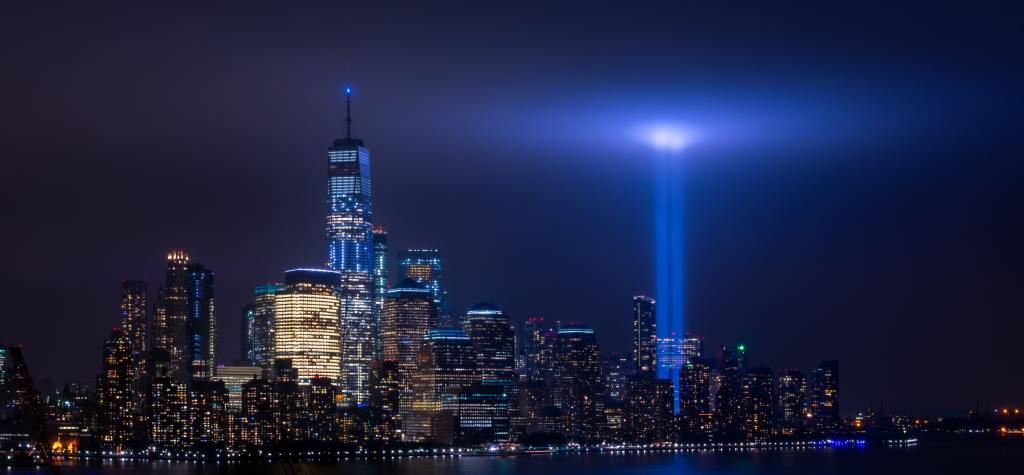
The Tribute in Light in Lower Manhattan

Last weekend, we passed the 20th anniversary of the terrorist attacks of September 11, 2001. As a native New Yorker who was in New York on that day, I find it hard to believe that twenty years have already passed since then.

I talk about that day from a variety of different perspectives. I talk about that day from the perspective of someone who suddenly lost two friends, as two of the firefighters I used to talk with as a little child died on 9/11. I talk about that day from the perspective of a New Yorker, since I was a resident of Queens when the attacks happened (and even saw some of the smoke on my street). I talk about that day from the perspective of a seven-year-old, as there are certain things I remember vividly and certain things I don’t remember at all because I was so young when it all happened.

But in this blog post, I want to write from the perspective of someone who lives in a neighborhood and a city that became a ground zero for anti-Muslim and anti-Sikh violence ever since the attacks, even if I didn’t realize it for years.

I want to write from that perspective because I want people, including people who don’t think of Islam favorably, to realize just how destructive these anti-Islamic sentiments (and by extension anti-Sikh sentiments, as Sikhs are often mistaken for people practicing Islam) could be.

It is the sort of sentiment which led to someone trying to throw a Molotov cocktail into a mosque not long after 9/11.[1] It is the sort of sentiment which led to Muslims in my area being spat upon and harassed by passers-by, only to get unsympathetic responses from the very people supposed to protect their public safety (as well as others’ safety): the police.[2] It is the sort of sentiment that led my own mom to receiving dirty looks and muttered comments once when she wore her winter scarf in a way that some mistook as her being Muslim. And it is the sort of sentiment that became so pervasive in America that President George W. Bush felt the need to denounce anti-Muslim harassment happening in the days after 9/11.[3]

Sikhs have become victims of this anti-Islam sentiment, often because many Sikhs (and particularly Sikh men) wear turbans, and because of the wearing of turbans Sikhs are often mistaken for Muslims. As a result, Sikhs have also been victims of anti-Islamic sentiment even though they don’t practice Islam. As a result, Sikhs in my neighborhood were beaten up over and over again in the months and years after 9/11. One noted story of a Sikh beating in my neighborhood happened while he was heading back from a Sikh temple where he prayed for 9/11 victims.[4]

The hatred directed at Muslims and Sikhs was so bad that people from those two religious groups honestly feared going out after 9/11, and at times still have to be cautious when they are out. It got so bad that some of the Sikhs in my neighborhood, after 9/11, felt they needed to wear buttons saying “I am a Sikh American” in order to try and “prove” to a skeptical audience that they were every bit as deserving of being out and about as anyone else. It was so bad that a kid who took karate with me—a kid from a Muslim family—had to drop out of karate classes and minimize the amount of time they spent out in public for months after 9/11 because the family of the kid was that scared of going out in public.

Do I mourn for all those lost on 9/11? Absolutely. I mourn for all who lost their lives on that day, including the two firefighter friends of seven-year-old me. But I also mourn because of the anti-Sikh and anti-Muslim sentiment that has been directed at so many innocent people since then, and still carries on to this day. And I believe others should mourn for that, too.


[1] https://www.nbcnews.com/id/wbna3067562

[2] https://www.mbda.gov/sites/default/files/migrated/files-attachments/September_11_Backlash.pdf

[3] http://www.cnn.com/2001/US/09/17/gen.hate.crimes/

[4] https://qns.com/2001/09/ignorant-teens-beat-sikh-in-richmond-hill/