
While I took my break from the blogging world on the week of Memorial Day, Starbucks had racial bias training for its employees.
The reviews of the racial bias training from the general public were about as mixed as the reviews are for their lattes and cappuccinos. Some thought of this as a necessary step, while others were skeptical as to whether one afternoon of racial bias training would have any impact on individuals.
I will not use this post to review their racial bias training or racial bias training in general, because there are probably hundreds of other sites doing the same. Instead, I’m here to suggest that Starbucks and other employers should not just look at the racial biases of their rank-and-file employees but also at their own leadership’s racial biases. Likewise, we as consumers should look at the biases of not just rank-and-file employees but also at the leadership of companies.
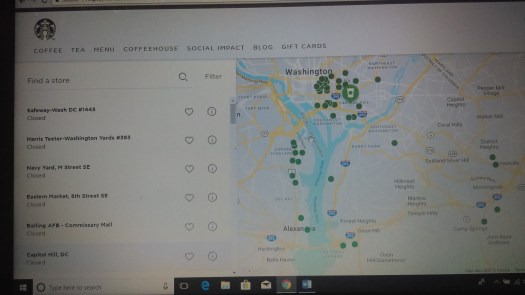
Without looking both outward at employees and inward at the employer’s leadership, one ends up with a company like Starbucks, a company that outwardly gives the façade of attempting to be just but inwardly has its own biases. Those biases are demonstrated through the company’s stunning refusal to open up stores in neighborhoods dominated by people of color (even neighborhoods dominated by people of color that are middle class, such as my neighborhood in Queens). If you doubt me, look at how many Starbucks are in Harlem (in New York City), Chicago’s South Side, Baltimore excluding the parts around the Inner Harbor or Johns Hopkins University, or Philadelphia outside of Center City and the area near the 30th Street Station. Indeed, Starbucks’ bias training feels like a façade for its own biases.
However, I am not here just to pick on Starbucks, because the fact is that Starbucks is not the only large organization guilty of having bias training while having its own biases. For example, Google’s bias training has existed much longer than Starbucks’, yet their demographics demonstrate that there is bias somewhere along the way: their workforce is severely lacking in black and Latino employees, for example. The New York City Public Schools will spend millions in racial bias training for its educators while allowing a school system that is severely segregated. They are just two of numerous employers that have training to try preventing racial bias while continuing to have their own unconscious biases as an organization.
This is not to suggest that the racial bias training should end at these organizations—I am not enough of an expert (yet) on them to give an answer on that. What I am suggesting, however, is that we can’t just look at the racial biases of a barista at Starbucks or a public school teacher in New York City, but also the racial biases of those who decide where to open up Starbucks or those who decide on policies that segregate schools further in New York City. After all, if we fail to look at organizations’ racial biases, from top to bottom, we will find ourselves blind to a significant amount of racial injustice.
 Blind Injustice