Regarding the Derek Chauvin Murder Trial

The George Floyd Mural in Minneapolis, Minnesota

Like with many people in the United States, and across the world, my heart was beating at a mile a minute as the judge in the Derek Chauvin Murder Trial read the verdict on all three counts:

Guilty.

Guilty.

Guilty.

After I heard the verdict, I was personally relieved. I know many others who feel relieved with the verdict as well, for it meant that George Floyd’s life mattered enough that the police officer who killed him went to prison.

However, in my own humble opinion (humble because I do not have to worry about police on a daily basis like my friends of color do), what we saw today was not justice for George Floyd. Justice would’ve been if George Floyd didn’t get killed at the hands of Derek Chauvin.

Instead, what we got was accountability. Namely, accountability for a chokehold that lasted nearly 10 minutes. Derek Chauvin, the person who killed George Floyd, was held accountable for that chokehold.

That accountability often does not happen. Look at Eric Garner, Philando Castile, Michael Brown, Sean Bell, and many others. All of these individuals were killed by police officers, and yet the police officers who killed them didn’t go to jail. In all these cases, we got neither justice nor accountability.

The ultimate goal should be justice, period. Justice means that Blacks are treated the same by law enforcement as others–something that is far from being the case. Justice means that Blacks aren’t so disproportionately subject to everything from marijuana use to being shot at in spite of being unarmed.[1] Justice means that my friends of color and my brother’s friends of color are given the same treatment by law enforcement that I receive.[2] But justice goes beyond policing–it means the elimination of racial inequality in everything from our schools to our economic systems. Reaching this goal of justice will not be easy, and it may take a long time to achieve this goal (especially as long as too many people keep electing politicians who do everything in their power to keep us from marching towards justice), but that should be our goal.

However, we can hope that the guilty verdict in the Derek Chauvin Murder Trial will at least be a first step towards accountability. Namely, accountability in terms of how Blacks are policed. With accountability, we can get a step closer to making sure that Black lives truly matter.

Please note that I wrote this piece on the fly, so I apologize in advance for any mistakes I made here.


[1] https://blindinjusticeblog.com/2020/06/01/on-the-policing-of-people-of-color-and-the-death-of-george-floyd/

[2] Ibid.

The Coronavirus and Ageism

The Coronavirus has severely affected the United States, and the world in general. However, one population that has been particularly affected by this horrid pandemic is the 65+ population, for about 8 in 10 Americans killed by COVID-19 thus far have been 65 and older.[1]

One would hope for a compassionate response to this fact, a response that tries to make sure that the populations that seem most vulnerable (older persons as well as the immunocompromised) are taken care of. Unfortunately, that has not always been the case; instead, some have responded with something along the lines of โ€œoh, itโ€™s just old people.โ€ There are several issues with this โ€œitโ€™s just old peopleโ€ response:

  • Such comments come across as if older persons are not of as much value as the rest of us and are therefore not worth saving as much as everyone else is.
  • Such comments are also, in a way, attacking our future selvesโ€”many of us may end up being older persons at some point, so devaluing older persons is in a way devaluing some of our future selves.
  • Such comments are also attacking of some of our family members. You know what? If youโ€™re saying โ€œitโ€™s just old peopleโ€ and you have family or friends who are over the age of 65, you are, de facto, attacking those family members or friends.
  • While the virus has disproportionately affected older persons, itโ€™s not just old people dying of the virus. Younger persons, including and especially those who are immunocompromised, have also been seriously affected by the virus, and in some cases, killed. I wrote about one such personโ€”a family friendโ€”in my most recent COVID update post.

If we are to rid ourselves of this โ€œitโ€™s just old peopleโ€ sort of attitude, we will need to completely change our mindset in terms of how much the lives of older persons matter. In my observations, at least, this issue with how much many people in our society value the lives of older persons dates back to long before COVID. The pandemic may have heightened our awareness of this issue, but the issue did not start with the pandemic.

As to how we go about changing those perceptions, Iโ€™m not completely sure, but addressing a couple of problems may help address the โ€œitโ€™s just old peopleโ€ attitude:

  1. There can be this attitude of โ€œsuch-and-such old person will die soon anyway, so thereโ€™s no need to worryโ€ (an attitude that I know my momโ€™s mother, who is in her nineties, has experienced herself since before the pandemic). With many people living to their eighties, nineties, and even sometimes over 100 years old, the assumption that a person will die soon is in some cases a mistaken assumption. Even if itโ€™s not a mistaken assumption, it is vital to make someoneโ€™s quality of life as good as it can possibly be while they are on this earth.
  2. Who matters most, at least in the United States, feels like it is often tied to who is making the most money. As the overwhelming majority of those 65 and older in the United States are not employed or looking for work,[2] the non-working older population is less likely to be viewed as being of value as the rest of the population. A key here might be to realize that someone need not make lots of money to be of value of society.

Regardless of the source of the โ€œitโ€™s just old peopleโ€ mentality, it is a mentality that needs to be gotten rid of, for the sake of older persons and the pandemic as a whole. Peopleโ€™s lives may very well count on a shift of attitude towards older persons.


[1] https://www.aarp.org/health/conditions-treatments/info-2020/coronavirus-deaths-older-adults.html

[2] https://www.aarp.org/work/employers/info-2019/americans-working-past-65.html

Coronavirus Update From New York City: April 15, 2021

Unfortunately, I have to start tonight’s post yet again in a downbeat manner.

Last weekend, my family lost a family friend to COVID.

It was devastating to learn this news. While it was my dad who knew this person far better than anyone else, it is news that affects all of us in one way or another.

The news also provided me with a somber reminder that nobody is truly invincible when it comes to this virus. This person was barely in her forties and had already received her first vaccine dose–two things that some people may mistakenly think are things going for this person. But nope. While some of us may like to or want to believe that this is a virus that mostly older persons get (not that it makes the disease any less serious because younger persons can carry the disease to older persons), or that this is a disease that makes you invincible even upon the first dose of the Pfizer and Moderna vaccines, such things are not the case.

Last, but not least, this death is yet another reminder that this pandemic is far from over. We may like to think that because vaccines are coming to us, the pandemic is coming to an end. While I hold some hope for the vaccines, we need more than vaccines–people need to stop the partying, the masklessness, and the lack of social distancing. People who continue to willfully ignore the public health guidance on COVID need to start caring for individuals other than themselves.

As for what numbers are like in my part of New York City this week, the test positivity rate is at 8.3%. That is actually relatively level compared to where the numbers were last week. Still, these numbers indicate that my part of New York City is far from being out of the woods with the virus, even if more people are getting vaccinated.

I guess the ultimate takeaway, between the news I have this week and the test positivity numbers I just said, is that even if some of us may want to be done with the virus, the virus is far from being done with us. Let’s continue to wear our masks, socially distance, and keep non-essential travel to a minimum.

What Isโ€ฆthe School-to-Prison Pipeline?

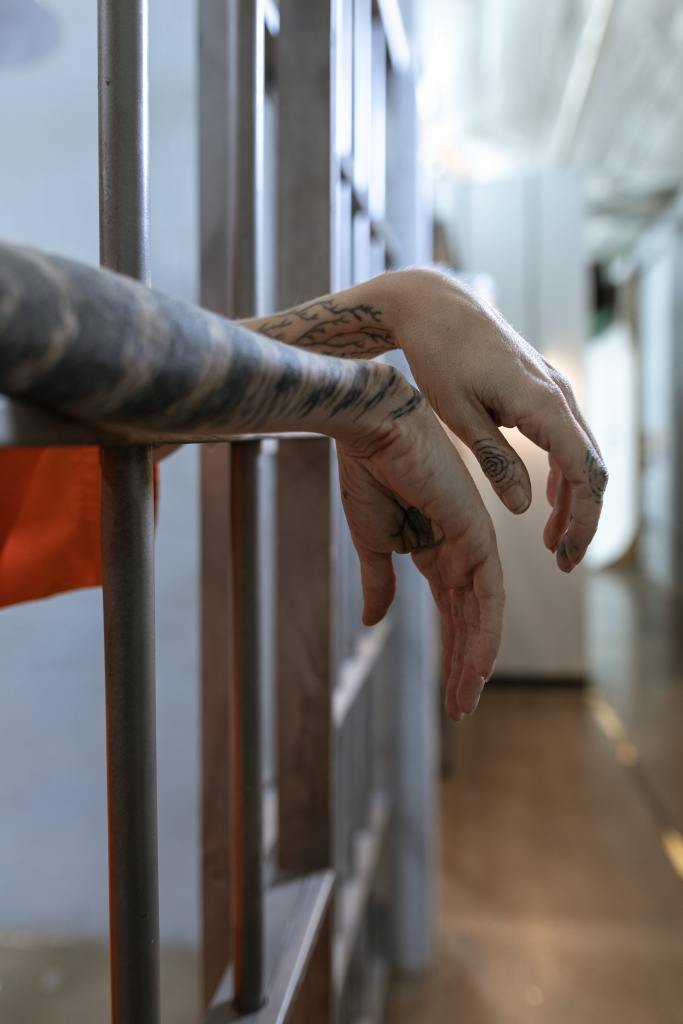
What appears to be a photo of someone in a prison.

In a post I made a couple of months ago about policing and schools with majority-minority populations, one of the replies to my post reminded me of how there was a connection between what I talked about and something called the โ€œschool-to-prison pipeline.โ€ And, it is indeed the case that there is a connection between the post I wrote about a couple of months ago and the school-to-prison pipeline.

But what it is the school-to-prison pipeline?

In short, it is โ€œa disturbing national trend wherein children are funneled out of public schools and into the juvenile and criminal justice systems.โ€[1] This trend, which some kids from disadvantaged backgrounds are particularly vulnerable to (hence, this is an issue that often disproportionately affects kids of color and kids with mental health issues, to name two particular populations), involves isolating and punishing kids who cause trouble in school, in the process pushing them out of school and into the juvenile and criminal justice systems. In many such cases, various educational and counseling services might be most warranted, but instead students are often isolated and punished.

Some issues that lead to the school-to-prison pipeline include, but are not limited, to:

  • Zero-tolerance policies, which impose severe punishments upon students regardless of circumstances. Such policies are often punitive to the point that the punishment does not fit the crime. Such policies can push students out of the โ€œschoolโ€ part of the school-to-prison pipeline.
  • Police officers at schools, who are often responsible for policing the hallways at schoolsโ€”a role usually reserved for teachers and school administrators. This can lead to something called school-based arrestsโ€”an issue that happens with some frequency.[2] Worse yet, these arrests can happen on quite a few occasions for minor behaviors,[3] issues that might not have resulted in arrest were it not for police officers at schools.
  • A lack of resources for many schools, which means that the extra educational support or counseling support that a troubled student might need is not available. Because of that lack of availability to such vital services (and generally the lack of ability some schools have in providing vital services), students can be at an increased risk for dropping out and for future legal involvement.[4]

So how do we address this pipeline?

For one thing, I think we need to go back to a question I asked in my previous blog post on policing and schools with majority-minority populations: Should we really have police officers in schools? I know that โ€œabolish the policeโ€ is a controversial idea, but if police in schools donโ€™t protect the schools, donโ€™t protect the students at the schools, and mostly serve as a major enabler in the school-to-prison pipeline, then I honestly think that law enforcement at schools is doing way more harm than good. One other thing I will add is that if there must be law enforcement in schools (and Iโ€™m not convinced personally that it is something we must have), I think it is a must that said law enforcement is competent in interacting with kids the age that theyโ€™re supposed to work with and protect.

For another thing, zero-tolerance policies need to be reevaluated. Not all actions should receive the same punishment. Creating an environment of restorative justice (repairing the harm caused by the crime, as well as giving the offender the opportunity to do better in the future) as opposed to punitive justice (punishing the offender severely, regardless of the severity of the crime) gives an opportunity for people to learn from their mistakes, not to mention that it creates an environment likely to decrease the chances of seeing the school-to-prison pipeline come to fruition.

Last, but not least, in cases where local municipalities are unable to provide the resources needed for schools to be well-resourced, I think that states and the federal government need to step in and make sure said schools and school districts are properly resourced. A significant piece of school funding relies on local property taxes,[5] which means that if you live in an area where property values are depressed, then revenue from property taxes is depressed. This creates a ripple effect which leads to school funding in a district also being depressed. Depressed school funding, in turn, results in a lack of access to many resources for the students who need them the most.

The school-to-prison pipeline is shameful. Hopefully, in my lifetime, progress can be made to address this problem.


[1] https://www.aclu.org/issues/juvenile-justice/school-prison-pipeline

[2] There were nearly 70,000 such arrests nationwide in the 2013-14 school year. I would like to see more current data, but this number gives us a sense of how much of a problem this was, as of a few years ago: https://www.edweek.org/which-students-are-arrested-most-in-school-u-s-data-by-school#/overview

[3] https://steinhardt.nyu.edu/metrocenter/ejroc/ending-student-criminalization-and-school-prison-pipeline

[4] https://www.aclu.org/issues/juvenile-justice/school-prison-pipeline

[5] https://www.npr.org/2016/04/18/474256366/why-americas-schools-have-a-money-problem

Coronavirus Update From New York City: April 8, 2021

First of all, I hope people have had a good Easter, Passover, or whatever holiday you celebrate.

This evening’s post, unfortunately, is starting on a sorrowful note. The reason for that is because I learned this week that a couple of people in a family who live in a house near mine lost their lives to COVID-19. As if I don’t already have enough reminders of how serious this pandemic is, I received yet another reminder this week. I don’t know when the two individuals passed away, but regardless, I keep these two individuals in my own thoughts and prayers.

This news also is a reminder of how fickle the pandemic can be. Nobody in my family has gotten COVID to our knowledge, yet we have people nearby who got COVID, and people nearby who even died of the pandemic. It’s so fickle that at this point I don’t know if it’s the strict following of public health precautions, dumb luck, or some combination of the two that has kept my family COVID-free. Personally, I think that it’s a combination of the two.

The other downer in the past week, albeit a downer in a different way, was the nature of the Easter Sunday holiday for me. Now, I went to church, but it was not like going to church on a regular Easter. I say that because I didn’t sing any hymns last Sunday, while in contrast I would passionately sing hymns on a regular Easter Sunday. I realize that from a COVID transmission standpoint, it was for the best that I didn’t sing, because droplets from your mouth travel much further when you sing than when you speak in a normal tone of voice. Yet, it it was still painfully difficult for me to abstain from singing–so much that I was in tears from resisting that temptation to sing the songs played on my church’s organ. While it was not as difficult as having to do Easter from home last year, it was challenging nevertheless.

The irony is that according to the church calendar of in the Catholic tradition and some other Christian religious traditions, we have just passed through Lent–a season that involves some form of sacrifice for many believers. And yet, even though the church calendar says that this season is over, emotionally and spiritually it feels like I haven’t even exited Lent 2020, even though Lent 2021 has already passed. I say this because the COVID-related sacrifices started in Lent 2020 and for me, at least, they haven’t stopped since then. I guess I can hope that the COVID situation turns around so that it spiritually feels like Easter by late summer? Fingers crossed.

On a different (and better) note, the test positivity rate for COVID in my neighborhood is at 8.2%, which is down from where it was last week. This seems to be bucking the trend (in a good way) compared to many parts of the United States, where COVID is again on the rise to the point that there is debate about whether there is now a fourth wave of the pandemic. This is also bucking the trend compared to the rest of New York City (at least at the moment), where the test positivity rate is stable.

The other positive piece of news is that vaccine distribution seems to be accelerating, to the point that 38% of adults in New York City have received at least one vaccine dose. As vaccine supply continues to expand, and as vaccine eligibility has expanded massively in the past couple of weeks (to the point that all New Yorkers 16 and older are now eligible for a vaccine), I trust that this number will go up even further. It is concerning, though, that there continues to be racial disparities in who is getting vaccinated–Blacks and Latinos are getting vaccinated at much lower rates than whites.

I know my post was a bit of a downer in parts today, but in spite of that, I do retain hope for better days ahead.