Access to Clean, Safe Drinking Water: A Racial Justice Issue

An image of water. Photo by Pixabay on Pexels.com

When some of us (particularly those of us of means) in the United States think of places that lack access to clean drinking water, we think of certain countries on the African continent. And, it is true that parts of Africa struggle to access even the most basic of water services—nine of the ten worst countries in the world in terms of access to clean water are located on that continent.[1]

However, I am concerned that many of us may be blind to issues of water access at home, in the United States of America. Furthermore, I am concerned that many of us may be blind about how this access to water is a racial justice issue.

Sure, a major report on the water crisis in Flint, Michigan, a few years ago cited systemic racism as being at the core of the problems with the crisis (Flint is a majority-Black city),[2] but the situation in Flint is only a microcosm of widespread problems when it comes to water issues and racial justice. Consider these facts:

  • 2 million Americans lack access to running water and basic indoor plumbing as of November 2019. Native Americans are 19 times more likely than their white counterparts to be without indoor plumbing, while African American and Latinx people have no indoor plumbing at almost twice the rate of white people.[3]
  • Tap water that violates legal water safety standards in the United States is 40% more likely to serve people of color.[4]
  • Rising water bills, which in turn makes it difficult for households to afford their own water, has disproportionately affected Black communities.[5]

Without meaning to belittle the importance of making sure that people in different countries all around the world have access to clean and safe drinking water, maybe we should also look at the issues with water access and safety in our own backyard, too. And we should look at these issues through a racial justice lens because it is clear that there is a connection between race and water access/safety. To that end, water access is not just a human rights issue (because every human on this planet should have the right to clean, safe, affordable drinking water), but also a racial justice issue.

While water may not get the sort of attention issues-wise that certain other elements of racial justice advocacy may be getting right now, it is no less important. After all, if we are given water that leaves us unwell in some way, then we end up unable to advocate for the other racial justice issues at hand. As such, water access and cleanliness, while not getting the attention it often deserves, should get attention in the push for racial justice, and particularly racial justice for Black and Indigenous communities.


[1] https://www.worldvision.org/clean-water-news-stories/10-worst-countries-access-clean-water

[2] https://apnews.com/article/us-news-race-and-ethnicity-mi-state-wire-flint-michigan-df42de2ec4424193866467a2981ccb51

[3] https://www.marketwatch.com/story/2-million-americans-dont-have-access-to-running-water-and-basic-plumbing-2019-11-20

[4] https://www.forbes.com/sites/daphneewingchow/2021/02/28/a-recent-survey-casts-new-light-on-americas-racial-and-water-divide/?sh=16840f221a6e

[5] https://www.naacpldf.org/wp-content/uploads/Water_Report_FULL_5_31_19_FINAL_OPT.pdf

What Is…BIPOC?

Some terms are criticized as social justice jargon. However, many of these terms are important to know about and understand.

Over the past couple of years, one term that has increased in usage is BIPOC. This term has seen a particularly significant increase in the wake of the killings of George Floyd, Breonna Taylor and Ahmaud Arbery.[1]

But what is BIPOC, and why is that term significant?

In short, BIPOC is an acronym that stands for Black, Indigenous, and people of color. However, it is more than “just” an acronym—it is an acronym that is meant to “highlight the unique relationship to whiteness that Indigenous and Black (African Americans) people have, which shapes the experiences of and relationship to white supremacy for all people of color within a U.S. context.”[2]

In reading many of the sentiments of those who like the term BIPOC, one common theme seems to be how the term reinforces the connections between Black and Indigenous people in experiencing racism in an America. In a way, BIPOC is an acronym of solidarity. While there may be certain experiences of Black people that differ from certain experiences of Indigenous people (for example, how some Black families still grapple with the legacy of slavery and segregation while some Indigenous families grapple with the legacies of Indian boarding schools), there is also that commonality in experiencing that relationship to whiteness that links Black and Indigenous people.

It is worth noting that there is another acronym different from BIPOC, yet also related: POC. POC stands for people of color. Before the events of the past year and a few months, I seldom saw BIPOC but commonly saw POC on social media and elsewhere.

My mention of POC, of course, provokes another question: Does this mean that we should use BIPOC instead of POC from now on? If a 2020 National Public Radio piece which asks the same question is an indicator of anything, opinions are divided on the question.[3] There are strong opinions on this question, but also differing ones. I personally do not feel it is in my place to be involved in the debate over whether to use BIPOC or POC, as I don’t fall under the POC/BIPOC umbrella.

What I do feel, though, is that for those of us who aren’t POC/BIPOC, we should understand both acronyms and their significance. Yet, at the same time, we should be ready to understand what is being talked about when we hear or see others talk about POC or BIPOC, and be ready to use either acronym depending on what our POC/BIPOC neighbors, friends, and colleagues prefer. Hopefully, those who have read this post will now have a greater understanding of both terms when they are used.


[1] https://www.cbsnews.com/news/bipoc-meaning-where-does-it-come-from-2020-04-02/

[2] https://www.thebipocproject.org/

[3] https://www.npr.org/2020/09/29/918418825/is-it-time-to-say-r-i-p-to-p-o-c

Regarding the Derek Chauvin Murder Trial

The George Floyd Mural in Minneapolis, Minnesota

Like with many people in the United States, and across the world, my heart was beating at a mile a minute as the judge in the Derek Chauvin Murder Trial read the verdict on all three counts:

Guilty.

Guilty.

Guilty.

After I heard the verdict, I was personally relieved. I know many others who feel relieved with the verdict as well, for it meant that George Floyd’s life mattered enough that the police officer who killed him went to prison.

However, in my own humble opinion (humble because I do not have to worry about police on a daily basis like my friends of color do), what we saw today was not justice for George Floyd. Justice would’ve been if George Floyd didn’t get killed at the hands of Derek Chauvin.

Instead, what we got was accountability. Namely, accountability for a chokehold that lasted nearly 10 minutes. Derek Chauvin, the person who killed George Floyd, was held accountable for that chokehold.

That accountability often does not happen. Look at Eric Garner, Philando Castile, Michael Brown, Sean Bell, and many others. All of these individuals were killed by police officers, and yet the police officers who killed them didn’t go to jail. In all these cases, we got neither justice nor accountability.

The ultimate goal should be justice, period. Justice means that Blacks are treated the same by law enforcement as others–something that is far from being the case. Justice means that Blacks aren’t so disproportionately subject to everything from marijuana use to being shot at in spite of being unarmed.[1] Justice means that my friends of color and my brother’s friends of color are given the same treatment by law enforcement that I receive.[2] But justice goes beyond policing–it means the elimination of racial inequality in everything from our schools to our economic systems. Reaching this goal of justice will not be easy, and it may take a long time to achieve this goal (especially as long as too many people keep electing politicians who do everything in their power to keep us from marching towards justice), but that should be our goal.

However, we can hope that the guilty verdict in the Derek Chauvin Murder Trial will at least be a first step towards accountability. Namely, accountability in terms of how Blacks are policed. With accountability, we can get a step closer to making sure that Black lives truly matter.

Please note that I wrote this piece on the fly, so I apologize in advance for any mistakes I made here.


[1] https://blindinjusticeblog.com/2020/06/01/on-the-policing-of-people-of-color-and-the-death-of-george-floyd/

[2] Ibid.

What Is…the School-to-Prison Pipeline?

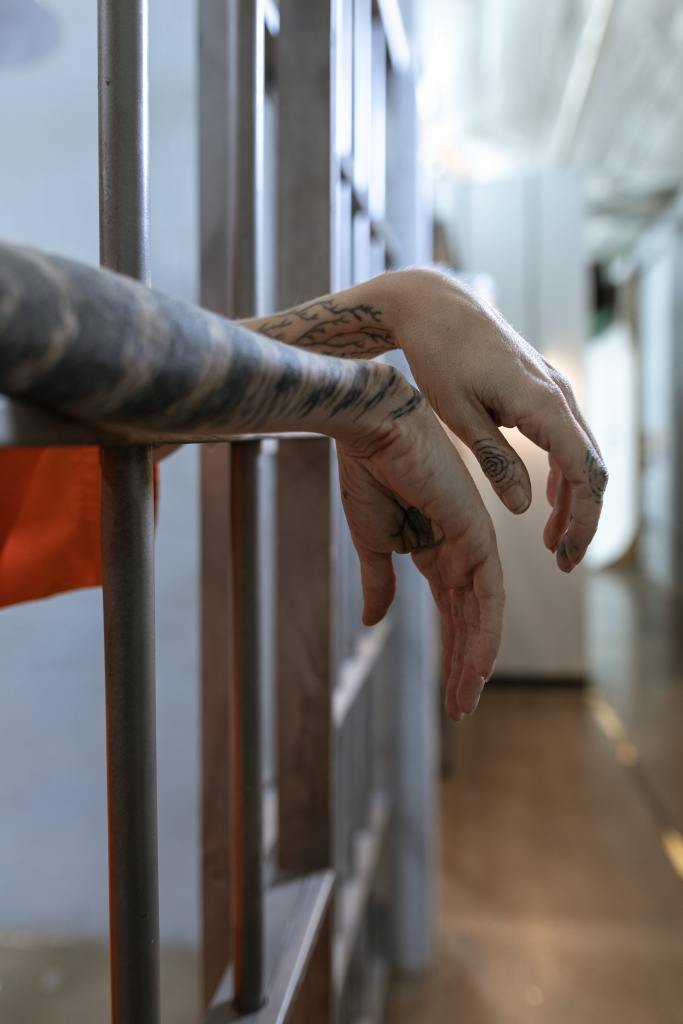
What appears to be a photo of someone in a prison.

In a post I made a couple of months ago about policing and schools with majority-minority populations, one of the replies to my post reminded me of how there was a connection between what I talked about and something called the “school-to-prison pipeline.” And, it is indeed the case that there is a connection between the post I wrote about a couple of months ago and the school-to-prison pipeline.

But what it is the school-to-prison pipeline?

In short, it is “a disturbing national trend wherein children are funneled out of public schools and into the juvenile and criminal justice systems.”[1] This trend, which some kids from disadvantaged backgrounds are particularly vulnerable to (hence, this is an issue that often disproportionately affects kids of color and kids with mental health issues, to name two particular populations), involves isolating and punishing kids who cause trouble in school, in the process pushing them out of school and into the juvenile and criminal justice systems. In many such cases, various educational and counseling services might be most warranted, but instead students are often isolated and punished.

Some issues that lead to the school-to-prison pipeline include, but are not limited, to:

  • Zero-tolerance policies, which impose severe punishments upon students regardless of circumstances. Such policies are often punitive to the point that the punishment does not fit the crime. Such policies can push students out of the “school” part of the school-to-prison pipeline.
  • Police officers at schools, who are often responsible for policing the hallways at schools—a role usually reserved for teachers and school administrators. This can lead to something called school-based arrests—an issue that happens with some frequency.[2] Worse yet, these arrests can happen on quite a few occasions for minor behaviors,[3] issues that might not have resulted in arrest were it not for police officers at schools.
  • A lack of resources for many schools, which means that the extra educational support or counseling support that a troubled student might need is not available. Because of that lack of availability to such vital services (and generally the lack of ability some schools have in providing vital services), students can be at an increased risk for dropping out and for future legal involvement.[4]

So how do we address this pipeline?

For one thing, I think we need to go back to a question I asked in my previous blog post on policing and schools with majority-minority populations: Should we really have police officers in schools? I know that “abolish the police” is a controversial idea, but if police in schools don’t protect the schools, don’t protect the students at the schools, and mostly serve as a major enabler in the school-to-prison pipeline, then I honestly think that law enforcement at schools is doing way more harm than good. One other thing I will add is that if there must be law enforcement in schools (and I’m not convinced personally that it is something we must have), I think it is a must that said law enforcement is competent in interacting with kids the age that they’re supposed to work with and protect.

For another thing, zero-tolerance policies need to be reevaluated. Not all actions should receive the same punishment. Creating an environment of restorative justice (repairing the harm caused by the crime, as well as giving the offender the opportunity to do better in the future) as opposed to punitive justice (punishing the offender severely, regardless of the severity of the crime) gives an opportunity for people to learn from their mistakes, not to mention that it creates an environment likely to decrease the chances of seeing the school-to-prison pipeline come to fruition.

Last, but not least, in cases where local municipalities are unable to provide the resources needed for schools to be well-resourced, I think that states and the federal government need to step in and make sure said schools and school districts are properly resourced. A significant piece of school funding relies on local property taxes,[5] which means that if you live in an area where property values are depressed, then revenue from property taxes is depressed. This creates a ripple effect which leads to school funding in a district also being depressed. Depressed school funding, in turn, results in a lack of access to many resources for the students who need them the most.

The school-to-prison pipeline is shameful. Hopefully, in my lifetime, progress can be made to address this problem.


[1] https://www.aclu.org/issues/juvenile-justice/school-prison-pipeline

[2] There were nearly 70,000 such arrests nationwide in the 2013-14 school year. I would like to see more current data, but this number gives us a sense of how much of a problem this was, as of a few years ago: https://www.edweek.org/which-students-are-arrested-most-in-school-u-s-data-by-school#/overview

[3] https://steinhardt.nyu.edu/metrocenter/ejroc/ending-student-criminalization-and-school-prison-pipeline

[4] https://www.aclu.org/issues/juvenile-justice/school-prison-pipeline

[5] https://www.npr.org/2016/04/18/474256366/why-americas-schools-have-a-money-problem

Addressing the Shootings in the Atlanta Area

In my COVID update post last Thursday, I spent the first part of the post talking about the shootings that happened in three Atlanta-area spas. However, I think it is important to dedicate a full post to the shootings, considering some of the discourse that’s existed in the shootings’ aftermath.

First of all, my heart goes out to the families of the victims. No platitudes or words can ever possibly erase the fact that Soon Chung Park, Hyun Jung Grant, Suncha Kim, Yong Ae Yue, Soon Chung Park, Hyun Jung Grant, Suncha Kim, and Yong Ae Yue should not have died in shootings.

As of the time I published this post, the exact motive of the shooting remains unknown, but much speculation about the shooting seems to center around ethnicity (most of the people killed were women of Asian descent, four of whom were of Korean descent) and the perpetrator’s alleged sex addiction.

But, regardless of whether the motive is ethnicity-related, sex addiction-related, some combination of the two, or neither one, we need to talk about two of the big issues raised in light of the shooting: anti-Asian hate and sex addiction itself (also known as compulsive sexual behavior[1]).

With regards to anti-Asian hate, while there is still an investigation into how much that was a motive of the shooter, what cannot be denied is that anti-Asian hate crimes have been sharply on the rise in the past year. In 16 of America’s largest cities, the targeting of Asian people has increased by 150% in the past year.[2] Even if the current investigations happen to find that anti-Asian bias wasn’t a motive by the shooter, it does not take away from the fact that anti-Asian speech and violence are a problem in this country, and a problem that is exacerbated by the fact that too many in American society (including the previous President of the United States) have either scapegoated people of Asian descent for COVID or fanned the flames of scapegoating people of Asian descent.[3] Regardless of the shooter’s motive, anti-Asian bias is an issue we need to grapple with.

Speaking of anti-Asian bias, and hate crimes in general, while the statistics indicate that anti-Asian hate crimes are on the rise, the reporting of hate crimes in the United States is not what it should be. The reason is that data on hate crimes depends on the voluntary submission of data from local police agencies—something that results in severe undercounting of hate crimes.[4] This is an issue that needs to be discussed more in order to truly understand the extent of anti-Asian bias, which in turn could better inform decisions on how to address said hate. The underreporting of hate crimes frankly requires its own blog post, and I plan on talking about this issue more in next week’s blog post.

As for the issue of sex addiction/compulsive sexual behavior, I am deeply concerned that this shooting will end up stigmatizing people who struggle with compulsive sexual behavior in general. This is an issue some people struggle with, but it is not an issue that necessarily results in someone becoming violent as this shooter became violent. In fact, a doctor interviewed by USA Today who’s been treating people with compulsive sexual behavior for over 30 years says that under 1% of his patients have committed any violent act.[5] In spite of that, the most famous example of someone allegedly battling this sort of issue is this mass shooter, so I am therefore concerned that the shooting could create an issue for people battling compulsive sexual behavior.

Yet, at the same time, there is a history of the notion of sex addiction being used by people, usually white men, to try and absolve themselves for their responsibility with certain actions, especially actions that are misogynistic.[6] As such, while it is completely possible that this sort of issue played a role in the shootings, we should be careful not to automatically assume that issues with compulsive sexual behavior/sex addiction were a motive, in spite of what the shooter has said about a sex addiction playing a role in his motivation for killing people.

There is so much more that could be talked about, but given that investigations are ongoing as of the time I’m publishing this post, I will wait to say too much more until the current investigations run their course. That being said, if there is more that I feel needs to be said once that happens, I will be sure to do so.


[1] Based on the literature I’ve read from both the Mayo Clinic and the National Institutes on Health, there seems to be some question about whether compulsive sexual behavior (which does exist) is clinically an addiction: https://www.ncbi.nlm.nih.gov/pmc/articles/PMC4677151/. I am not qualified to answer this question, but what I will say is that if the scientific experts at the Mayo Clinic and the National Institutes on Health both believe that some people struggle with compulsive sexual behavior, I am also inclined to believe that some people struggle with compulsive sexual behavior. Additionally, since there is some question as to whether compulsive sexual behavior is clinically an addiction, I’m going to call it “compulsive sexual behavior” as much as I can in this blog post.

[2] https://www.nbcnews.com/news/asian-america/anti-asian-hate-crimes-increased-nearly-150-2020-mostly-n-n1260264

[3] I talked about this in my post a couple of weeks ago about scapegoating groups during a crisis: https://blindinjusticeblog.com/2021/03/08/scapegoating-groups-during-a-crisis-is-nothing-new/

[4] https://www.propublica.org/article/police-dont-do-a-good-job-tracking-hate-crimes-a-new-report-calls-on-congress-to-take-action

[5] https://www.usatoday.com/story/life/health-wellness/2021/03/18/atlanta-shooting-sex-addiction-what-it-can-turn-violent/4746720001/

[6] https://www.nbcnews.com/news/asian-america/how-sex-addiction-has-historically-been-used-absolve-white-men-n1261623