On Remembrance of the Holocaust

Today is International Holocaust Remembrance Day. Today is also the 75th anniversary of the closing of the Auschwitz concentration camp.

And here’s the thing—so much has been forgotten about the Holocaust that what I said in my previous paragraph means little or nothing to a large percentage of people in this world.

The statistics are staggering. About a third of Europeans—the people who live on the continent where the Holocaust actually happened—know little or nothing about the Holocaust.[1] 41 percent of Americans don’t even know what Auschwitz is,[2] and two thirds of people in my age bracket (18-34) don’t know what Auschwitz is, either.[3]

Statistics aside, anti-Semitism seems to be on the rise, including in the United States. It’s a reality I’m painfully aware of in New York City, a city with a large Jewish population. That reality hit close to home for me, as one of the attacks that made the news in New York City recently happened just two blocks from where I work.

Given the grim picture I’ve outlined, I’m going to attempt to do three things here: talk about what the Holocaust is, talk about why we should be terrified of the thought of people not remembering the Holocaust, and make some suggestions about how the United States and the world can do to remember the Holocaust better.

So, for readers who don’t know, the Holocaust was when the Nazi regime of Adolf Hitler, the leader of Germany from 1933 to 1945, wanted to “purify” Germany[4] of anyone considered inferior. Jews were particularly hard hit, as 6 million of them were killed in what were called concentration camps, including 1 million at Auschwitz. Other groups suffered high death tolls—that includes 7 million Soviets (including 1.3 million Soviet Jews), about 3 million Soviet prisoners of war, around 1.8 million Poles, 312,000 Serbs, up to 250,000 people with disabilities, up to 250,000 gypsies, at least 70,000 repeat criminal offenders, and an unknown number of gay men.[5] In total, Hitler’s efforts to “purify” resulted in the deaths of 15 to 20 million people—the population of New York City, Los Angeles andChicago (the three biggest cities in America) combined at the lower end of the death toll estimate.

It’s scary to think that such a heinous act of mass murder is forgotten by so many. By forgetting the Holocaust, we are forgetting the immense danger in labeling any group of human beings as inferior to other human beings just because of their religion, their ethnicity, their sexual orientation, or some other characteristic that does no harm to others. After all, by labeling any human being as inferior to any other human being for such traits, we are already halfway there to the mindset that the Nazis had—the Nazis also believed that some humans were inferior to others, but took it a step further and said that because of this inferiority, those “inferior” people must be exterminated. By failing to remember the Holocaust, we are failing to recognize the mindset that led to the Holocaust, and the mindset that has, quite frankly, led to chants such as “Jews will not replace us” from the rising forces of anti-Semitism in parts of the world.[6]

But how can we remember the Holocaust better, and avoid the consequences of forgetting about it? I probably don’t have every possible solution, but I will mention a few:

  1. Cities, states, and nations should make Holocaust education mandatory in curricula. To my surprise, I found, while doing research for this article, that only a handful of states in the U.S. do so.[7]
  2. We should all should explore other avenues for continuing Holocaust education beyond the classroom. I know that sounds vague, but the possibilities vary so widely, ranging from visiting a Holocaust museum to reading and listening about the experiences of those who lived through the Holocaust, that I wanted to leave this open-ended.
  3. All forms of social media must have a zero-tolerance policy on Holocaust denial, anti-Semitism, neo-Nazism, and white nationalism. Unless something changes between when I’m making my last edits on this piece (Sunday, January 26th, 2020) and when this piece gets published, Facebook still allows for Holocaust denial on its platform.[8] Shame on Facebook.

Yes, it is extremely terrifying that so many people don’t know what the Holocaust is or what Auschwitz is. Terrifying as that may be, I hope that this post is a call to action for us to educate ourselves and others about what happened in this dark time in history, so that we do not let something like the Holocaust ever happen again.


[1] https://www.politico.eu/article/holocaust-poll-third-of-europeans-know-little-or-nothing/

[2] https://www.nbc26.com/news/national/survey-41-percent-of-americans-dont-know-what-auschwitz-is

[3] https://www.cnn.com/2019/01/27/opinions/holocaust-education-importance-wall/index.html

[4] This does not just include modern-day Germany; it also includes land that the Nazis took control of, which at its height spanned large portions of Europe.

[5] https://encyclopedia.ushmm.org/content/en/article/documenting-numbers-of-victims-of-the-holocaust-and-nazi-persecution

[6] “Jews will not replace us” was the chant from extremist neo-Nazi and white supremacist groups in Charlottesville, Virginia back in 2017, when anti-Semitic violence engulfed the city: https://www.theatlantic.com/politics/archive/2017/08/nazis-racism-charlottesville/536928/

[7] https://www.newsweek.com/more-states-making-holocaust-genocide-education-must-472003

[8] https://www.usatoday.com/story/opinion/2020/01/26/auschwitz-liberation-ban-holocaust-denial-on-facebook-column/4555483002/. While this is an opinion piece, it also confirms (as of January 26, 2020) still allows Holocaust denial.
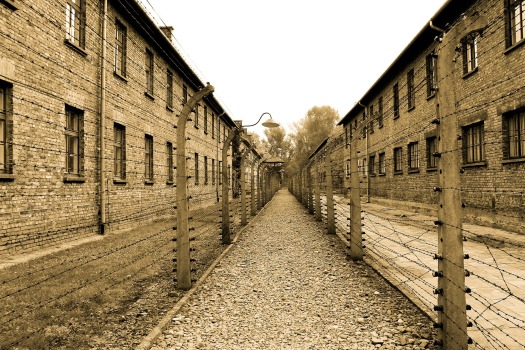
An image of Auschwitz concentration camp.

A Few Words Heading into the 2020 United States Elections

Image of someone casting a ballot.

This calendar year, we already know what one of the biggest stories will be: the elections for President of the United States. The first part of the year will focus on the Democratic Party primaries and caucuses, while much of the second half of the year will have campaigning for the election in November between the Democratic nominee and President Donald Trump.

For all my readers who live in the United States (which is most of my readers), I ask that you keep in mind issues such as economic justice, racial justice, women’s rights, LGBTQ+ issues, environmentalism, immigration, and more, as you consider which candidate to support. In other words, I hope my readers keep in mind the sorts of issues that I try to talk about here on a weekly basis.

Too often, these issues, and other issues relevant to those on the margins in American society, are not taken into consideration as much as they should be. The good news, however, is that every voting American has the power to change that in 2020.

On State-Supported Gambling

What if I were to tell people that there was a state-supported, even state-funded, addiction in the United States?

Well, such is the case with gambling, at least in many states in the United States.

One of the popular suggestions these days, as a means of raising revenue, is to propose the building of casinos or other state-supported gambling. “They will help pay for making our schools better,” some of our politicians say. “They will pay for themselves and support the local economy.”[1]

So, how does state-supported gambling turn out? If you guessed “not well at all,” then you’d be correct. I can provide many examples, but I will highlight three in particular for the sake of brevity:

  1. For years, New York State has had off-track betting corporations (OTBs). They were created with the promise of reducing illegal betting while bringing in revenue. I don’t know if they reduced illegal betting, but OTBs failed so miserably at the revenue part that their financial conditions have worsened significantly, according to…the New York State Comptroller.[2] So much for revenue.
  2. Colorado casinos were also created with the promise of bringing in revenue. Well, that’s also not happening. Actually, Colorado casinos are reportedly “investing in themselves” in order to try and bring revenue.[3]
  3. On numerous occasions, California has endured budgetary woes. On many of those occasions, it was promised that some new revenue stream from gambling would help pay for the budget woes. However, on numerous occasions, expansions in gambling did not do what they promised to do—increase revenue.[4]

As a result of this state-supported gambling, we end up with a bunch of broken promises. But it’s more than broken promises. We end up with people, and entire families, broken because of the proliferation of gambling addiction as a result of these casinos and other gaming mechanisms. We end up with governments scrambling to find other means to raise revenue, since casinos don’t do that job. And we end up with an oversaturation of the gaming industry, which does nobody any favors and results in shuttered casinos.

Instead of state-supported gambling, I make two policy propositions. First, states should curtail further support of gambling, because the fiscal and social costs of gambling seem to outweigh any money it is supposed to bring in.[5] Second, states should support Gamblers Anonymous programs. Gambling is an addiction that must be taken seriously, and all of us, including governments, should act as such.

State hotlines for gambling addictions can be found here: https://www.verywellmind.com/usa-local-problem-gambling-hotlines-22031


[1] These are not the exact words of someone who has made a pro-casino argument, but I’ve heard similar sentiments expressed by pro-casino politicians in the past.

[2] https://www.osc.state.ny.us/localgov/pubs/research/otb0915.pdf

[3] https://www.cpr.org/2018/11/21/flat-revenues-and-tough-competition-the-tricky-hand-colorado-casinos-are-dealt/

[4] https://www.latimes.com/politics/la-pol-ca-road-map-california-gambling-betting-revenues-20190303-story.html

[5] I don’t recommend making gambling illegal, because then gambling would be unregulated and problematic in other ways. However, further heavy investment in casinos and the like should stop.

On Body Image Issues

After comedian Bill Maher made a call to bring back “fat-shaming”, or humiliating someone judged for being fat, I wanted to re-publish this post.

Anyone who looks at me for the first time will notice that my stomach…well…sticks out. I am overweight, and there is no doubt about that fact.

I will even admit that I’ve had my insecurities, at times, about the fact that I am overweight. Part of it is because of how I look, because honestly I often haven’t liked the look of my stomach sticking out. Part of it is the very legitimate concern that, because I’m overweight, I am at an increased risk for just about every health problem ranging from heart attacks to arthritis at an earlier age. And then part of it is that I feel like I’d be perceived of poorly because I look a little fat.

I think that these insecurities—insecurities which seem to be shared by many other people who’ve struggled with body image issues—need to be broken down for everyone’s sake:

The Idea that a Stomach Sticking Out (or Jiggly Arms or a Fat Neck) Looks Ugly

I could be wrong, but I think this message has been sent because the idealized bodies in our society are viewed as athletic men with six-pack bodies and women in fashion who wear size 0 clothing.  As such, many of us strive for that size 0 or that six-pack body. And I can’t lie—at times before, I have been envious of guys with six-back bodies from a looks standpoint.

For people who feel this pressure, you ARE beautiful. And I mean that. Just by virtue of the ways you can help people by using the body you have, you are beautiful. Whether you are of a healthy weight, overweight, or underweight, you are beautiful because you have a body that you can use to give smiles, help others in various ways, and make the world a better place.

Concerns about Being Overweight and Having Health Problems

We hear all the time about how overweight people are at risk for everything from arthritis to heart disease.  People of a healthy weight don’t need to tell those of us who aren’t about all of the potential health problems as if we’re ignorant; I, and many other overweight people, know and are aware of these issues.

At the same time, it’s also not healthy to be underweight. Being too underweight comes with health problems as well. Furthermore, taking measures too drastic to lose weight could result in anything from eating disorders to exercise addictions, which also are not healthy.

The bottom line is that, while it’s ideal for people like me to lose some weight, none of us should go to the other extreme and try so hard to lose weight that we create a new set of health issues.

Worries about Being Perceived of Poorly Because of Looking Overweight

Many of us, myself included, worry that, because we’re viewed as fat, we’ll be viewed as: a) lazy, b) not conscious of our health, c) couch potatoes, d) sloppy, e) not having the “right” kind of body to attract a significant other, or f) some or all of the above.

I do not belittle any of these insecurities because, quite frankly, I’ve experienced all of them! People who have no idea how many miles I like to walk when I relax in my free time have told me to “go to the gym,” and people who don’t know how hard I’ve worked to tweak my diet have questioned whether I care about my health, for example. And, as silly as this sounds, parts of me wondered at times in the past if my not having a girlfriend had to do with my not having the right physique.

If you experience any or all of these insecurities, too, my big encouragement is that we should not let ourselves be defined by how others view us, or how we think others view us. We should define ourselves in other ways, and hopefully ways that give us more fulfillment and happiness than stress and dismay.


While the individual insecurities are different, there’s one central theme with each insecurity. Namely, they all revolve around concerns that our bodies are not sufficient, that they are not “enough.” And that is a lie. Our bodies are enough. Believing anything short of that would be unjust to ourselves.

Picture of me
This was me at the International Young Leaders Assembly at the United Nations in Summer 2016. The body in the picture is capable of doing great things, and so are others’ bodies.

Cutting Civics from School Curricula: An Unjust Move

With the school year either coming up or starting in many states, kids are preparing to learn a multitude of subjects: history, English, Math, and Science, to name a few.

One subject will be noticeably absent for some kids: Civics.

Civics, which is defined as “a social science dealing with the rights and duties of citizens,”[1] can teach students about, among other things:

  1. The importance of voting;
  2. How to know who their representatives are;
  3. How they can be involved in the legislative process, by writing to their representatives about important issues (or calling their legislators);
  4. How people can use their representatives to solve a wide range of issues (provided the representative is responsive, of course);
  5. How to follow the affairs of the government in your city, state, and country.

Teaching kids about these things, and more, through a vibrant Civics curriculum, should be an absolute no-brainer. It promotes civic involvement and awareness of local affairs.

And yet, it seems like Civics education is often on the chopping block in school districts, states, and even federally.[2]

When these cuts come to fruition, what this means is that many kids will grow into adults who are in grave danger of lacking awareness of the full extent of their rights and duties as citizens, ranging from voting rights to the right they have to push their representatives on major issues.

In short, hyperbolic as this may sound to some, cutting Civics is a form of voter suppression and a form of weakening our democracy. After all, if kids aren’t taught about who their representatives are, how will they know to vote for (or against) their representatives when they are adults? If kids don’t know that they can write to their representatives, what will keep a representative from going against the will of their residents, whether that will is spoken or unspoken? If kids aren’t taught how to follow government affairs, how can they cast an informed ballot when they’re adults?

For those of us who think that voter suppression and disenfranchisement starts at the age of 18, when a citizen can vote, think again. It starts when kids are taught minimal or no Civics. However, my readers (or at least readers who live in the United States) can play a role in stopping this—if you ever hear your government, whether it be your school district, your city, your state, or your country, considering cuts to Civics programs, contact your representatives and make it known just how important Civics truly is.

Please note that I will not publish a post next Tuesday, as it will be the Tuesday after Labor Day.


[1] https://www.merriam-webster.com/dictionary/civics

[2] Apparently, Civics was among Education Secretary Betsy DeVos’s proposed budget cuts. I don’t know if this proposal saw the light of day, but the fact that Civics is so frequently on the chopping block, even at the federal level, should alarm proponents of Civics education: https://www.washingtonpost.com/education/2019/04/03/special-olympics-funding-outcry-is-over-its-been-crickets-over-some-devoss-other-proposed-education-budget-cuts-think-civics-history-arts/?noredirect=on