The Government Shutdown Screws Over the Poor

While I touched on the government shutdown in last week’s post, I felt that it was really important this week to dedicate a full post to the government shutdown. The task of dedicating a post to the shutdown, admittedly, was tremendously difficult because there are just so many injustices surrounding the whole debacle. There are environmental consequences of trash piling up in parks. There are national security consequences, as organizations responsible for our safety and security aren’t being paid (with all the stress, decrease in morale, and subsequent compromising of national security which comes along with the shutdown).[1] There are a lot of individuals and groups who get hurt by the shutdown.

When studying the shutdown a little more, it became quite obvious who I should focus on for this post: the poor. Why? Because if we’re honest with ourselves, those who are screwed over the most by this shutdown are the poor, whether we like to admit it or not.

For starters, government workers who are struggling to make ends meet already may find themselves without a home. This USA Today article from Christmas Day featured many a government worker (or many a government worker’s families) expressing anxiety about a potential inability to pay for basic living expenses. One of these workers even expressed anxiety about potential eviction if the government doesn’t open and back pay doesn’t kick in quickly. Members of Congress and the President will continue to get paid, but some poor government workers may end up homeless if this shutdown continues. The government shutdown screws over poor government workers who are living from paycheck to paycheck.

Additionally, tax refunds may be delayed as a result of the government shutdown.[2] The reason for this is that, as long as the government is shut down, tax refunds will not be issued at all. For people who are well off, these refunds may not be a big deal. But for people who are poor and who are living from paycheck to paycheck, it is a huge deal and it may be the difference between being able to afford the basics and not being able to afford the basics. The government shutdown screws over poor people for whom a tax refund may make a difference.

Finally, many food benefits are in danger as a result of the government shutdown, and additional food benefits will be endangered if the government shutdown drags on. For example, WIC, which is a nutrition program to help food-stressed and at-risk women and children, has already run out of funding, and it is left to local and state governments to cover for what the federal government can’t do. The Commodity Supplemental Food Program, which is a food program for low-income senior citizens, has suffered the same fate as WIC. If the shutdown drags on to the end of January, funding will run out for food stamps. If the shutdown drags into February, funding will run out for various child nutrition programs; this will endanger school breakfast, school lunch, summer food service, and other special programs.[3] The government shutdown royally screws over poor, food-stressed families.

Some people may not be affected severely by the government shutdown. But millions are already being severely affected by the shutdown, and the consequences will become significantly more dire for those affected the longer this shutdown goes. Most of all, though, it’s the poor who are getting screwed over the most by the incompetence in Washington, D.C.


[1] And to think that this shutdown was in the name of a “national security” issue—in other words, a border wall. Ironic, isn’t it?
[2] https://www.cbsnews.com/news/government-shutdown-delay-irs-tax-filing-and-refund-brings-chaos-just-before-tax-filing-season/

[3] https://www.usda.gov/media/press-releases/2018/12/29/usda-updates-available-functions-during-lapse-funding

Waste Disposal: Where Ableism, Economic Injustice, and Environmental Injustice Meet Up

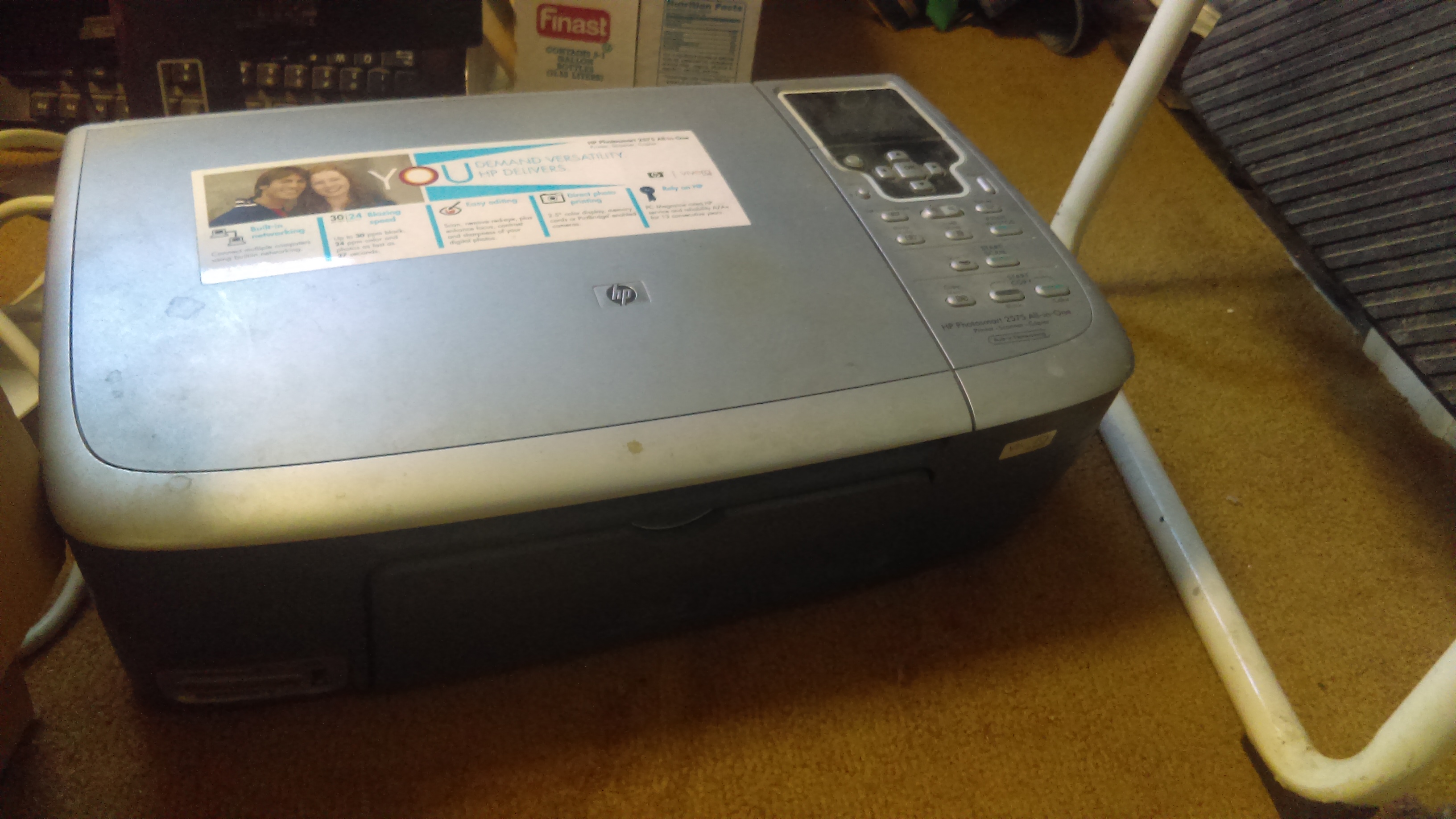
I have a bit of a Birth household confession to make: we have a growing amount of miscellaneous waste in my house. Among the products still lying about include a circa 2006 computer and its assorted parts, and light bulbs with mercury.

Fellow environmentalists are probably already judging me, and really my entire household, after my making this statement. But before you all judge me, please hear me out…

The problem my family faces, and the problem that many families face in New York and in other areas, is the relative lack of accessibility to places that handle certain types of waste.

For example, in my hometown of New York City, there are only five places (one for each borough) that handle waste such as latex paint, passenger car tires, and motor oil filters, among other things. To make matters worse, none of these so-called “Special Waste Drop-Off Sites” are centrally located, so you might have to dedicate an entire morning or afternoon to just dropping off your waste if you’re in the wrong part of New York City.

New York is not alone in having this problem. Seattle has only three such facilities in its entire city. Omaha, Nebraska has one option (a “Household Hazardous Waste Collection Facility”) for two entire counties. And Fremont County, Wyoming has only a few e-waste disposal areas in a land mass close to the size of New Hampshire.

The lack of accessibility to places that handle various types of waste is a major problem. This is a problem of ableism, economic injustice, and environmental injustice.

This is an issue of ableism because these policies assume that people can travel to waste-disposal facilities, and in many cases travel by car. If you are homebound, wheelchair-bound, or unable to drive, the waste-disposal policies of many municipalities prevent many people from disposing of their toxic waste.

This is also an issue of economic injustice because the policy of minimizing the number of waste disposal sites assumes that people have the freedom in their work schedules to potentially spend a couple hours to dispose of their materials. In a world where an increasing number of people need to work multiple jobs in order to keep rooves over their heads and food on their tables, this is an unsound assumption, and an assumption which results in many people being unable to dispose of their waste because their work schedules don’t allow them to do that.

Finally, this is an issue of environmental injustice because these policies make it difficult to impossible for many families to do the environmentally friendly thing—to take materials to a place that can properly handle them. When a municipality forces someone to travel several miles to dispose of tires or batteries, that town, county, or city is making it extremely difficult for people to properly dispose of their materials. If a place like New York City truly cared about the environment, the municipality would make it as easy as possible, not as hard as possible, to dispose of these materials properly.

For all of my complaining about the ableism, economic injustice, and environmental injustice of how assorted waste often gets handled, I also think it’s worth acknowledging that there is a better way to handle this issue.

This better way can be found in San Francisco. In that city, most substances can be dealt with by calling for a free home pick-up. A few other materials (old and expired medicines and needles) have numerous drop-off locations throughout that city. In fact, residents are only forced to travel a distance if they have unlabeled or unknown toxic waste or other hazardous substances. While I don’t know how this type of program works in practice, San Francisco’s way of handling waste, for the most part, theoretically keeps homebound people from travelling when they’re not able to travel, keeps people with busy lives from having to take hours out of their lives to travel to a facility, and makes it easy for residents to do the environmentally just thing.

Hopefully, other municipalities will follow San Francisco’s lead in making it easy for residents to deal with assorted waste. Until such a time as this happens, many waste-disposal programs are ableist, economically unjust, and environmentally unjust.

IMAG0512
This is one of several pieces of e-waste that I have in my house. This ancient printer is one such piece of e-waste and is harder to get rid of than some readers might think.