What is the 1994 Crime Bill, and Why is it So Controversial?

Many of the readers who have listened to some of the debates between candidates for President of the United States may be aware of a line of attack often used against former Vice President Joe Biden and Senator Bernie Sanders: “You voted for the 1994 crime bill.”

It’s a line used when the candidates on stage, all of whom are trying to become the presidential nominee from the Democratic Party, are trying to distinguish themselves from Senator Sanders and former Vice President Biden on the issue of criminal justice. It is especially important for other candidates to distinguish themselves from those two candidates because Senator Sanders and former Vice President Biden are viewed as frontrunners for the Democratic Party nomination. It is also a line that the other candidates use to try and convince their voters that they, not Senator Sanders or former Vice President Biden, should be trusted on the issue of criminal justice.

Which begs the question: What is the 1994 crime bill, and why is it so controversial? With the first caucus of the election year happening in Iowa tonight, answers to these questions are important.

The tricky thing about summarizing the 1994 crime bill is that the piece of legislation tried to address many issues, ranging from funding for police to gun control to domestic violence. The short story is that the 1994 crime bill, whose proper name is actually the Violent Crime Control and Law Enforcement Act of 1994, was supposed to focus on enforcement of and prevention of violent crimes, though it did some things beyond that scope (a couple of which I will talk about later in this post). For a detailed summary of the 1994 crime bill, view the bill’s summary here.

As one might expect with a bill trying to deal with a wide range of issues, the reality of how “good” or “bad” it was is actually more complicated than many candidates might make it out to be.

In spite of that fact, there are, undoubtedly, parts of the bill that should make one question Biden and Sanders on criminal justice (since they both supported the act and Biden helped write it[1]). For example:

  • The bill “stripped all Pell Grant funding for college education for prisoners.”[2] This sort of action counters the narrative among many (especially on the left) that incarceration should have a restorative element, that it should not just be about punishing someone for their actions, but that they also can be able to work towards being productive contributors to society when/if they leave prison.
  • The bill provided $6 billion (in 1994 dollars) in funding “for prevention programs which were designed with significant input from experienced police officers”[3]—money that was, from all accounts, spent on punitive measures for the most part. On the surface, it sounds like a good idea to let people with experience in law enforcement be able to have a say in how to prevent violent crime. The problem? As it turned out, that money was predominantly used for punitive measures[4]—measures that would go against the ideal among many Democrats that there should be a restorative element to time in prison.
  • The 1994 crime bill is blamed for being a factor in a drastic increase in incarceration in the United States.[5] The extent to which the current mass incarceration issues should be attributed to the 1994 crime bill is up for debate, especially since the increase in mass incarceration was already beginning to happen, but there seems to be significant agreement from criminal justice scholars that the bill made this problem worse.

However, there were also some aspects of the 1994 crime bill that are either popular with progressives or popular on a bipartisan basis. Three of those aspects are as follows:

  • There was considerable gun control in the 1994 crime bill. According to the bill’s summary, the bill, “Bans the manufacture of 19 military-style assault weapons, assault weapons with specific combat features, “copy-cat” models, and certain high-capacity ammunition magazines of more than ten rounds.”[6] While one could debate the effectiveness of this form of gun control, the fact is that gun control tends to be a major aspect of most candidates’ platforms on the Democratic side, and that therefore the 1994 crime bill did much of what a lot of Democrats want on guns (including Democrats critical of Biden and Sanders for their support of the 1994 crime bill).
  • One of the most popular aspects of the 1994 crime bill was the Violence Against Women Act (VAWA). VAWA, which was within the 1994 crime bill, added measures to better hold perpetrators of domestic violence accountable.[7] For example, before the 1994 crime bill, “domestic abusers could cross state lines to avoid prosecution for beating their spouses, as law enforcement was not to required to listen to orders of protection filed in other states” (something that, from my understanding, was not possible after the act passed).[8]
  • VAWA, which as I said was under the 1994 crime bill, also created the National Domestic Violence Hotline.[9] Before finding out that this hotline was established so recently, I have to admit to taking the existence of this hotline for granted; however, the fact is that the hotline is younger than I am (I’m twenty-five) and was only established thanks to the 1994 crime bill.

So, while it might make for a good debate line to be critical of Biden’s or Sanders’ support of the 1994 crime bill, the reality is somewhat complicated. Some aspects of it, such as the generally more punitive approach to crime as a result of the bill, have been quite controversial and even problematic. Other aspects, such as the creation of the National Domestic Violence Hotline, are quite important. Regardless, it’s important to recognize both the good and the bad in the 1994 crime bill (as well as Biden’s and Sanders’ support of it), because otherwise, we’d be doing an injustice to ourselves and to others when evaluating the platforms these candidates have on criminal justice.


[1] https://www.cnn.com/2019/05/15/politics/joe-biden-1994-crime-bill-incarceration-fact-check/index.html

[2] https://www.bbc.com/news/world-us-canada-36020717

[3] https://www.ncjrs.gov/txtfiles/billfs.txt

[4] https://www.bbc.com/news/world-us-canada-36020717

[5] Ibid.

[6] https://www.ncjrs.gov/txtfiles/billfs.txt. I should note that this provision of the bill expired in 2004: https://www.npr.org/2019/08/13/750656174/the-u-s-once-had-a-ban-on-assault-weapons-why-did-it-expire

[7] https://www.ncjrs.gov/txtfiles/billfs.txt

[8] https://time.com/5675029/violence-against-women-act-history-biden/

[9] https://www.vera.org/justice-in-focus-crime-bill-20/confronting-violence-against-women
On Remembrance of the Holocaust

Today is International Holocaust Remembrance Day. Today is also the 75th anniversary of the closing of the Auschwitz concentration camp.

And here’s the thing—so much has been forgotten about the Holocaust that what I said in my previous paragraph means little or nothing to a large percentage of people in this world.

The statistics are staggering. About a third of Europeans—the people who live on the continent where the Holocaust actually happened—know little or nothing about the Holocaust.[1] 41 percent of Americans don’t even know what Auschwitz is,[2] and two thirds of people in my age bracket (18-34) don’t know what Auschwitz is, either.[3]

Statistics aside, anti-Semitism seems to be on the rise, including in the United States. It’s a reality I’m painfully aware of in New York City, a city with a large Jewish population. That reality hit close to home for me, as one of the attacks that made the news in New York City recently happened just two blocks from where I work.

Given the grim picture I’ve outlined, I’m going to attempt to do three things here: talk about what the Holocaust is, talk about why we should be terrified of the thought of people not remembering the Holocaust, and make some suggestions about how the United States and the world can do to remember the Holocaust better.

So, for readers who don’t know, the Holocaust was when the Nazi regime of Adolf Hitler, the leader of Germany from 1933 to 1945, wanted to “purify” Germany[4] of anyone considered inferior. Jews were particularly hard hit, as 6 million of them were killed in what were called concentration camps, including 1 million at Auschwitz. Other groups suffered high death tolls—that includes 7 million Soviets (including 1.3 million Soviet Jews), about 3 million Soviet prisoners of war, around 1.8 million Poles, 312,000 Serbs, up to 250,000 people with disabilities, up to 250,000 gypsies, at least 70,000 repeat criminal offenders, and an unknown number of gay men.[5] In total, Hitler’s efforts to “purify” resulted in the deaths of 15 to 20 million people—the population of New York City, Los Angeles andChicago (the three biggest cities in America) combined at the lower end of the death toll estimate.

It’s scary to think that such a heinous act of mass murder is forgotten by so many. By forgetting the Holocaust, we are forgetting the immense danger in labeling any group of human beings as inferior to other human beings just because of their religion, their ethnicity, their sexual orientation, or some other characteristic that does no harm to others. After all, by labeling any human being as inferior to any other human being for such traits, we are already halfway there to the mindset that the Nazis had—the Nazis also believed that some humans were inferior to others, but took it a step further and said that because of this inferiority, those “inferior” people must be exterminated. By failing to remember the Holocaust, we are failing to recognize the mindset that led to the Holocaust, and the mindset that has, quite frankly, led to chants such as “Jews will not replace us” from the rising forces of anti-Semitism in parts of the world.[6]

But how can we remember the Holocaust better, and avoid the consequences of forgetting about it? I probably don’t have every possible solution, but I will mention a few:

  1. Cities, states, and nations should make Holocaust education mandatory in curricula. To my surprise, I found, while doing research for this article, that only a handful of states in the U.S. do so.[7]
  2. We should all should explore other avenues for continuing Holocaust education beyond the classroom. I know that sounds vague, but the possibilities vary so widely, ranging from visiting a Holocaust museum to reading and listening about the experiences of those who lived through the Holocaust, that I wanted to leave this open-ended.
  3. All forms of social media must have a zero-tolerance policy on Holocaust denial, anti-Semitism, neo-Nazism, and white nationalism. Unless something changes between when I’m making my last edits on this piece (Sunday, January 26th, 2020) and when this piece gets published, Facebook still allows for Holocaust denial on its platform.[8] Shame on Facebook.

Yes, it is extremely terrifying that so many people don’t know what the Holocaust is or what Auschwitz is. Terrifying as that may be, I hope that this post is a call to action for us to educate ourselves and others about what happened in this dark time in history, so that we do not let something like the Holocaust ever happen again.


[1] https://www.politico.eu/article/holocaust-poll-third-of-europeans-know-little-or-nothing/

[2] https://www.nbc26.com/news/national/survey-41-percent-of-americans-dont-know-what-auschwitz-is

[3] https://www.cnn.com/2019/01/27/opinions/holocaust-education-importance-wall/index.html

[4] This does not just include modern-day Germany; it also includes land that the Nazis took control of, which at its height spanned large portions of Europe.

[5] https://encyclopedia.ushmm.org/content/en/article/documenting-numbers-of-victims-of-the-holocaust-and-nazi-persecution

[6] “Jews will not replace us” was the chant from extremist neo-Nazi and white supremacist groups in Charlottesville, Virginia back in 2017, when anti-Semitic violence engulfed the city: https://www.theatlantic.com/politics/archive/2017/08/nazis-racism-charlottesville/536928/

[7] https://www.newsweek.com/more-states-making-holocaust-genocide-education-must-472003

[8] https://www.usatoday.com/story/opinion/2020/01/26/auschwitz-liberation-ban-holocaust-denial-on-facebook-column/4555483002/. While this is an opinion piece, it also confirms (as of January 26, 2020) still allows Holocaust denial.

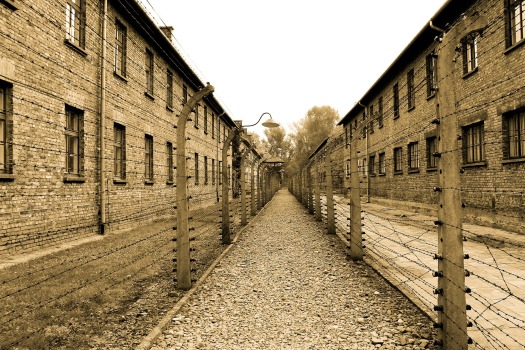
An image of Auschwitz concentration camp.

Slavery and Chocolate: Some Not-So-Sweet Truths

Every Valentine’s Day, Easter, birthday, and Christmas, many of us in the United States like to give chocolate to friends and/or family. Most of us look forward to getting that sweet goodness during those times of year.

For better or for worse, I’m about to sour that sweetness because of some ugly truths about slavery and chocolate.

Namely, there is a good chance that the chocolate you eat was made by slaves. But not just any slaves. Child labor.

A variety of sources have widely reported on how the three major American chocolate manufacturers—Hershey, Nestlé, and Mars (the makers of M&Ms)—all produce chocolate made with child labor. It has been a persistent problem, and a problem that isn’t getting resolved quickly.

Fortune Magazine best describes this problem in an article they wrote about the issue:
“The major chocolate companies—from Mars to Nestlé to Hershey—are heavily reliant on these countries for their cocoa supply. Most of the cocoa is produced on small farms by farmers living in extreme poverty. That poverty often leads to child labor. In 2001, after persistent media reports about child labor abuses and trafficking stirred outrage, the chocolate industry pledged to end the practices in Ivory Coast and Ghana by 2005. But progress has been slow.”

To give context on just how slow the progress has been, the article said that the industry made the pledge to end child labor by 2005. Fortune wrote this in 2016. Yes, you heard it: twenty freaking sixteen, eleven years after these companies promised to get their acts straight.

These companies, among others, have repeatedly broken their promises to end these practices. This is unacceptable.

But what can we, as regular people, do to end these practices? Especially if we don’t have the power to singlehandedly end these practices of child labor?

We must start by voting with our wallets, by refusing to buy chocolate that is made with child labor. I know it is tempting to buy those Reese’s Peanut Butter Cups or a Nestlé Crunch when you’re about to check out at the grocery store or drug store, but we should do all that we can to resist this temptation. Even if just one of us refuses to buy chocolate made by slaves, that one person is taking is taking an important moral stand. But if millions of us take that stand, we can hurt the profits of these companies until such point that they hopefully turn their backs on child labor.

But that’s not the only thing we can do. If you are a restaurateur or a college that owns and operates your own dining services, you can refuse to use products in your food from chocolate companies that use child labor. If you are an educator, educate yourself and your students on the fact that slavery still exists and helps produce some of the food we eat. If you invest in stocks, refuse to invest in companies such as Hershey, Mars, and Nestlé—if people sell stocks (or refuse to buy stocks) from companies like these en masse, in protest of their child labor practices, that can effect much more change than what I can do on this small but growing blog. Regardless of what your profession is (if any), there’s a chance that you can do more than simply refuse to buy your favorite candy bar at the grocery store.

As an alternative, we should instead buy, and invest in, cocoa that is not made with child labor. By purchasing chocolate which is Fair Trade Certified or is “Bean to Bar,” then the chocolate is generally not made with child labor. These companies, not companies which use child labor, should get our money.

However, I acknowledge that it takes a level of economic privilege to afford anything other than the cheap chocolate at the grocery store, and that people might not be able to afford excluding themselves to Fair Trade chocolate. For people in this position, I encourage you to reduce your chocolate intake as much as possible. Anyway, even without the issue of slave labor, chocolate is not the healthiest thing in the world! It just so happens to be that so much chocolate is being made with child labor. As a result, there is even more motivation than there would be otherwise to avoid many of the mass-marketed and mass-produced chocolate brands.

Yes, it is a not-so-sweet truth that child labor exists in the production of so much of the chocolate we eat. However, I remain hopeful that we can all do something to confront this problem.

Note: With Valentine’s Day, a day for purchasing chocolates, coming up, I thought I would re-publish this old post of mine.

M&M Blog Post
M&Ms is one of many chocolate products made by slave labor. By David Adam Kess (Own work) [CC BY-SA 4.0 (https://creativecommons.org/licenses/by-sa/4.0)%5D, via Wikimedia Commons

Looking to Share Emotional Burdens with a Friend? Before Sharing, Let’s Seek Consent

Consent matters.

That two-word phrase is used often these days when sexual consent is discussed. Those two words are right: consent matters, when it comes to sexual consent.

However, when you are hoping to possibly vent about a bad day at work or share something emotional or burdensome with something else, it’s also important to seek consent for doing that with the person you’re hoping to discuss with/vent to. In other words, another form of consent, that I call emotional consent, is important.

Emotional consent is when you seek someone else’s permission to tell them something(s) involving deep emotions or burdens. Through exercising this form of consent, you can share emotional, burdensome things only when the listener is physically, mentally, and emotionally able to handle it.

At this point, some of you might be thinking this: “Okay, emotional consent sounds great, but how can I exercise this?” I have four answers to that question:

  1. Ask yourself whether your friend will need to invest something significant in order to help you (whether it be time, emotional labor, or something else). If the answer is “yes,” I recommend seeking consent before sharing your burdens. If the answer is no, then chat away with your friend!
  2. Ask your friends questions along the lines of: “Can I share something heavy?” or “Can I vent about something?” if it turns out your friend does need to invest in you in some way. By asking these types of questions before moving a conversation further along, you give your friend the opportunity to say “yes” or “no,” depending on how your friend is doing. If your friend is happy to let you share, then you can share. HOWEVER, if there is an absence of an enthusiastic “yes,” ranging from “ummm…okay,” to “I guess,” to no response at all, to the straight-up “no,” then please do not think that you have emotional consent to share your burdens with your friend.
  3. If you’re going to talk about a specific type of issue or event that may bring emotions with someone (examples include sexual assault, divorce, and mental illness), make sure you give the content warning that your sharing will involve something with that specific topic. It’s important to do that because, without a content warning, you might jump right into an issue or story that reminds your friend of a traumatic event or set of events in their lives (and friends, of course, don’t want to put other friends in that type of situation).
  4. Make it clear that it’s okay if your friend does not want you to share the burden. A friend might worry that it would negatively affect the friendship if the friend is unable or unwilling to give emotional consent. However, if you reassure your friend that there is no such thing as a bad answer, even if your friend says “no,” then your friend doesn’t feel the need to listen to burdens without being emotionally ready for them.

Hopefully, what I said above gives a pretty good overview of what emotional consent is and why it’s important. However, I think it’s also extremely important to discuss what happens without that emotional consent. In my experiences of being on both the giving and receiving end of a lack of emotional consent, one or more of the following things often happens without it, none of them good:

  1. You dump burdens on the friend, and the friend doesn’t respond back because the friend just can’t emotionally deal with or consider the message, let alone respond to it.
  2. Your friend does respond, but does not give a wholehearted response because your friend just can’t handle your burdens fully at that time.
  3. Your friend just says that “I can’t handle this right now.” Or worse—your friend tells you that what you said has brought back bad memories.
  4. Your friend ends up being hurt emotionally by what you shared (whether that’s said or not), even if you didn’t intend it.

Instead of experiencing one or more of these potential events, my advice is to just seek emotional consent for heavy topics. Seek emotional consent from someone if you need to talk about your bad day at work, or something much deeper than that. If your friend consents to your talking about something(s) burdening you, then great! If not, then you will want to find someone else to talk to, as finding someone else to talk to would be in the best interests of you and your friend.

Indeed, consent matters.

Note: As emotional consent is something I consider “blindly just,” this is a “blindly just” post.

Also note that for those of you wondering how to avoid the emotional labor issues that I talked about in the post I shared on January 9, 2020 from another blogger (Arielle), emotional consent is a potential way for avoiding emotional labor issues.

How Wintry Weather is Not Friendly to People Struggling Physically or Mentally

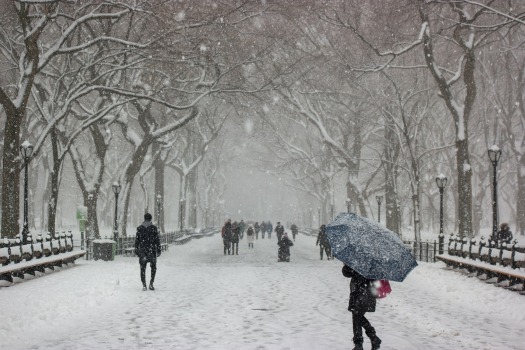
An image of snow.

For able-bodied people like me, commuting in the snow takes a little bit more twisting and turning than it does on the average day. It’s annoying, but doable, for me.

For people with certain health challenges, whether it be physical health or mental health, the barriers created by individuals’ and/or society’s handling of winter weather, as well as barriers caused by the bad weather itself, can be problematic. Here are a few such barriers:

We as individuals don’t clear away a path wide enough for wheelchair users to navigate our sidewalks. 

Many wheelchair users need a pathway that’s at least 32 inches, so a pathway shorter than that will most definitely not be friendly to people using wheelchairs. For this, the solution is simple—just clear a wide pathway on our sidewalks!

We as a society have no effective way of handling the crosswalks that get plowed in. 

After major snowstorms, many a crosswalk in New York City, my hometown, get plowed under inches or even feet of snow. This affects wheelchair users, the young, people with other mobility issues (regardless of whether they use a walker or wheelchair or not) and the elderly the most, keeping all of these groups from effectively moving around. I am personally not aware of effective yet reasonable alternatives to this problem, though if anyone has solutions you can let me know in the comments section down below!

Pathways between sidewalks and buses are nonexistent or not wide enough for wheelchair users to pass, or for people with other mobility issues to navigate.

This is something I only noticed during a blizzard in January 2018, but boy is it a problem! Many pathways between sidewalks and buses that should exist don’t exist, making access to the bus impossible unless you’re completely able-bodied as I am. If the entity/entities responsible can shovel a pathway between sidewalks and buses wide enough for wheelchair users and people with other mobility issues to pass, the problem can be fixed.

The bad weather has adverse affects on mental health. 

A string of bad weather days can affect people who deal with claustrophobia (fear of involving being confined to small spaces), and the weather can cause great deals of stress that can be harmful to mental health, to name two. Nobody per se is at fault for these issues, but nevertheless we should be aware that these issues exist.


So next time a snow or ice storm comes, some of us may rejoice while others may complain. But regardless of what our own reactions are, we must be sensitive to the challenges that people with disabilities face in the elements. To that end, feel free to comment below is there’s some issue (physically or mentally) caused by winter weather that I did not mention in this post.